
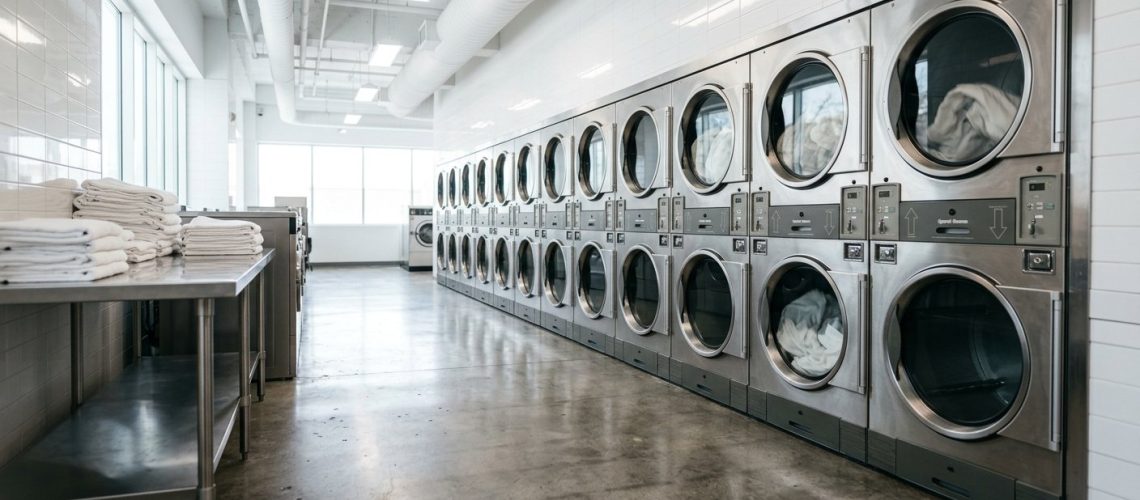
Speed Queen commercial dryers are among the most durable and service-friendly options available for hotels, laundromats, apartment communities, and healthcare facilities. Before purchasing, buyers need to evaluate capacity, gas versus electric configuration, venting requirements, and whether the dryer matches their washer throughput. The right choice depends on your specific load volume, utility setup, and how quickly you need to turn linen or resident laundry.
- Match dryer capacity to your washer’s extracted load weight — undersized dryers create throughput bottlenecks.
- Gas dryers typically dry faster and cost less per cycle to operate than electric in high-volume settings.
- Proper venting is non-negotiable; an under-vented dryer runs longer, wears out faster, and creates a fire hazard.
- Speed Queen’s commercial line is built for continuous-duty OPL and vended environments, not light residential cycles.
- Factory-authorized local service access is as important as the equipment itself — parts availability determines your real downtime.
Why Dryer Selection Gets Overlooked
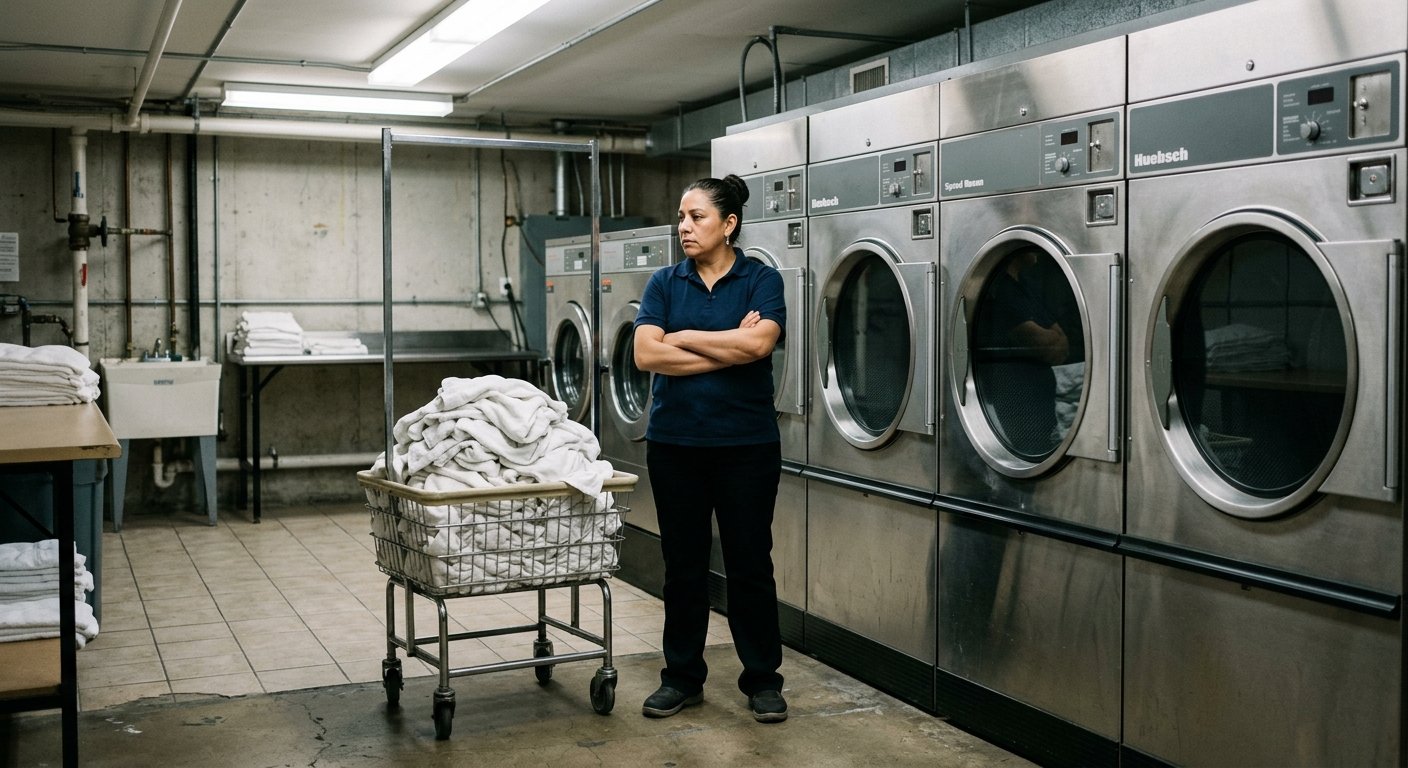
Most buyers spend the majority of their research time on washer selection — G-force extraction, hardmount versus softmount, cycle programming — and treat dryers almost as an afterthought. That’s a common mistake. A dryer that can’t keep pace with your washers turns your entire laundry operation into a queue. In hotels, that means housekeeping delays. In laundromats, frustrated customers leave. In nursing homes or hospitals, it creates linen shortages that affect patient care routines.
Speed Queen’s commercial dryer lineup is engineered specifically to handle back-to-back loads without the recovery time that residential or semi-commercial units need. That distinction matters enormously in high-volume settings across South Florida, where hospitality and healthcare facilities often run laundry rooms 16 to 24 hours a day.
The general rule of thumb in commercial laundry planning is a 1-to-1.5 dryer-to-washer ratio by capacity. If your washer pulls 18 to 20 lbs of wet laundry per cycle, you need a dryer rated for at least that — and ideally more — to maintain a continuous flow without stacking delays.
Gas vs. Electric: The Practical Decision
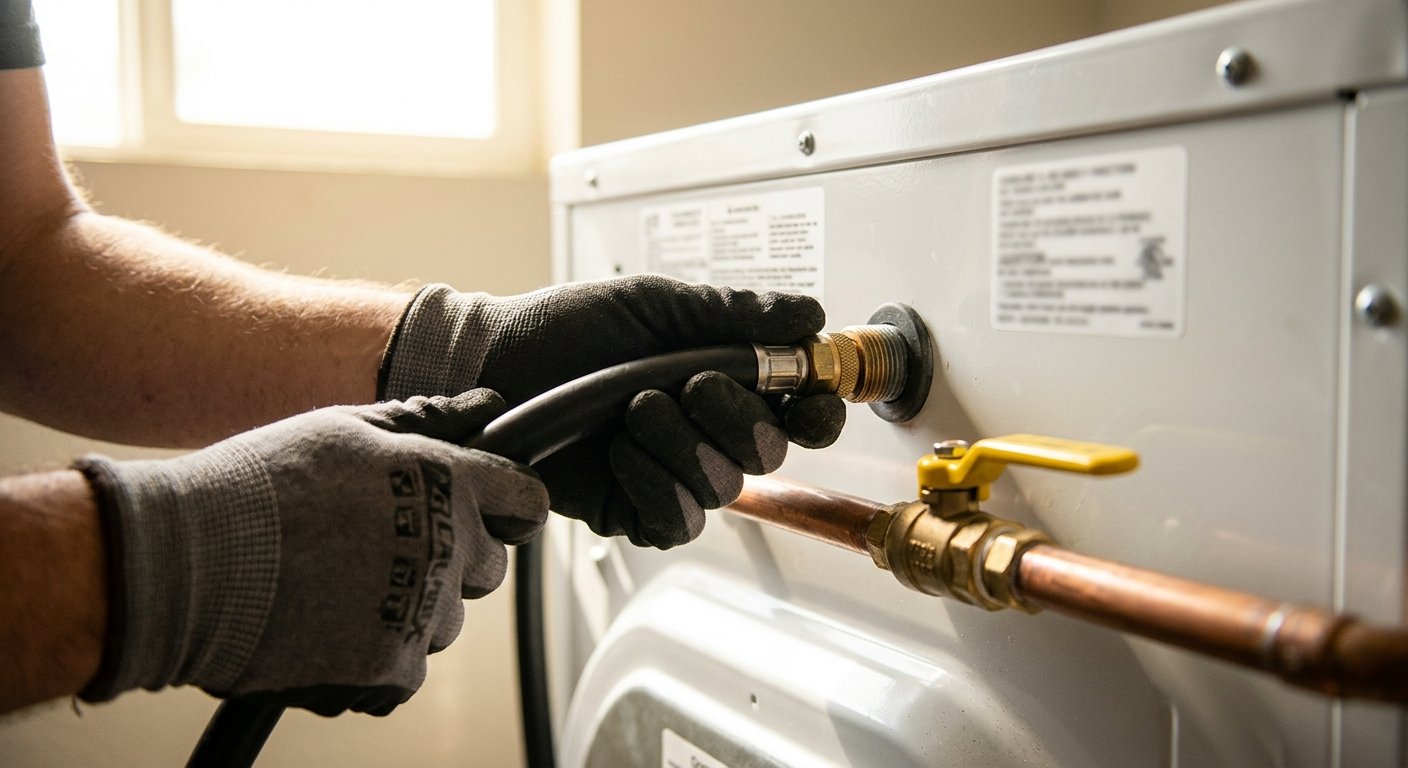
In a commercial setting, fuel type is one of the most consequential decisions you’ll make — and it’s largely determined by your facility’s existing utility infrastructure. Speed Queen commercial dryers are available in both natural gas and electric configurations, and each carries meaningful trade-offs.
| Factor | Gas Dryers | Electric Dryers |
|---|---|---|
| Heat-up speed | Faster recovery between loads | Slightly longer cycle times |
| Operating cost | Generally lower per cycle | Higher in most South Florida utility markets |
| Installation | Requires gas line and venting | Requires 208V or 240V circuit, still needs venting |
| Best fit | High-volume, continuous-use settings | Buildings without gas access or smaller OPL rooms |
For most hotels and laundromats in Palm Beach, Broward, and Miami-Dade counties, natural gas service is available and the operational cost difference over several years of heavy use is significant. If your building doesn’t have a gas line, an electric dryer is a perfectly capable alternative — but budget for the electrical panel capacity your installation will require. A licensed electrician familiar with commercial laundry rooms should review the load calculations before you finalize equipment choices.
Sizing Your Dryer to Your Operation
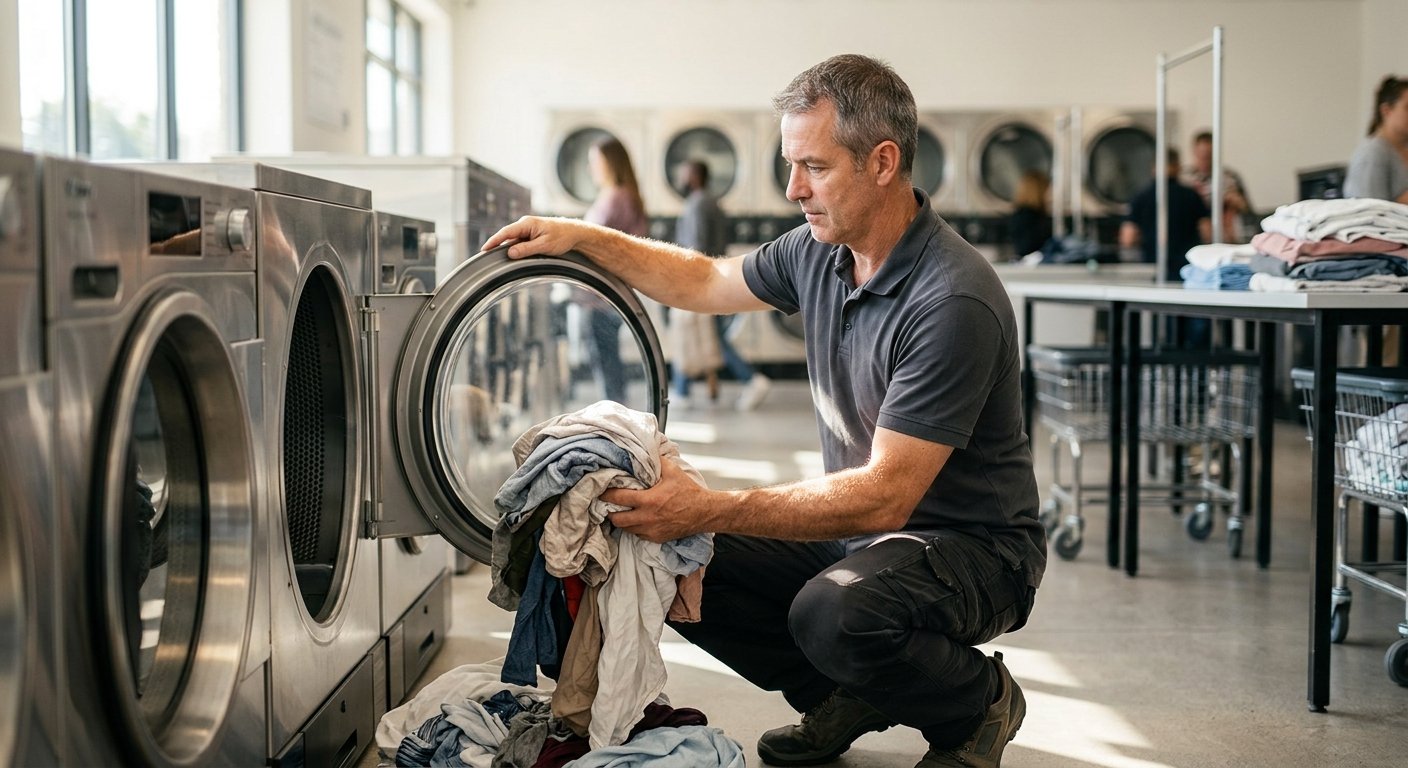
Speed Queen’s commercial dryer line spans a range of capacities suited to different facility types. Selecting the right size requires thinking about three things simultaneously: the wet weight coming out of your washer, your daily volume of loads, and the number of hours your laundry room operates.
For a small apartment community running an on-premises laundry (OPL) room, a single pair of properly matched washer and dryer may handle resident demand. For a 150-room hotel in Fort Lauderdale or Boca Raton with daily linen turnover, you’re likely looking at multiple washer-dryer pairings and a sequenced workflow. Getting this sizing wrong — in either direction — costs money. An oversized dryer running at partial load wastes energy; an undersized dryer running in constant catch-up mode wears out prematurely and frustrates staff.
This is where working with an experienced local equipment provider pays off. Over 55 years of serving South Florida’s commercial laundry market, we’ve sized OPL rooms for everything from beachfront resort hotels to dialysis centers to large multi-housing complexes. The right configuration for your operation isn’t always obvious from a spec sheet alone. You can explore our full approach to commercial laundry equipment for hotels or review our full commercial laundry equipment lineup to understand the range of options available.
Florida’s humidity creates a specific challenge: improperly vented dryers not only run inefficiently — they also accelerate lint trap and duct buildup, which is a leading cause of commercial dryer fires. The National Fire Protection Association identifies dryer exhaust duct cleaning and proper vent termination as critical fire prevention measures in commercial settings. Make sure your installation includes correct duct sizing, appropriate termination caps, and a maintenance schedule for duct cleaning.
What Makes Speed Queen Commercial Different
Speed Queen’s commercial dryers are built to a different specification than anything you’d find in a residential or even semi-commercial context. The cylinders, bearings, heating elements or burner assemblies, and controls are all designed for continuous-duty cycles — not the occasional household load, but 8, 12, or 20 loads per day, year after year.
The Speed Queen commercial equipment line also offers straightforward serviceability. Parts are standardized, widely stocked, and — when you’re working with a factory-authorized service provider — available locally without extended lead times. In South Florida’s competitive hospitality and healthcare markets, a dryer that’s down for a week waiting on parts isn’t just an inconvenience; it’s a direct operational cost.
Speed Queen’s commercial controls also tend to be intuitive for staff — an important consideration in facilities with high employee turnover or multilingual workforces. Complex programmable interfaces have their place in sophisticated OPL environments, but simple, durable controls reduce misuse and training time in many real-world settings.
The dryer that’s easiest to service quickly is often worth more than the dryer with the longest feature list.
Vended vs. OPL Dryer Configurations
Speed Queen offers commercial dryers configured for both vended (coin or card-operated) laundromat environments and on-premises laundry rooms. The hardware is often similar, but the control and payment integration differences are meaningful.
For laundromat investors in Miami, West Palm Beach, or surrounding counties, vended dryer configuration involves decisions about cycle pricing, time increments, and payment systems — increasingly, mobile payment and card readers rather than coin-only mechanisms. Speed Queen’s commercial line supports modern payment integration, which matters as South Florida’s laundromat market continues to modernize. The Coin Laundry Association tracks industry trends and reports ongoing growth in card and app-based payment adoption across the vended laundry sector.
For OPL environments — hotels, apartment complexes, healthcare facilities — vended controls aren’t needed, but cycle flexibility and staff-proof durability are. These environments benefit from dryers with straightforward temperature and time settings that are hard to override or break through misuse.
Assess your daily load volume
Count average loads per day and peak-day demand. Size for your peak, not your average — laundry rooms that can’t handle a busy Monday will always be a problem.
Confirm your utility configuration
Determine whether natural gas is available at your facility and verify electrical panel capacity. This determines fuel type before you ever look at a spec sheet.
Match dryer capacity to your washer’s extraction output
Identify the wet weight your washer delivers per cycle after extraction and select dryer capacity accordingly — don’t rely on washer dry weight alone.
Plan venting during the design phase
Duct routing, length, and termination should be engineered before installation, not improvised after equipment arrives. Involve your contractor early.
Choose a factory-authorized service provider
Equipment and service should come from the same relationship. Local, factory-authorized service access protects your investment long after installation day.
Frequently Asked Questions
How do I know what size Speed Queen commercial dryer I need?
Start with the wet weight of laundry coming out of your washer after the final extract spin. Your dryer should be rated to handle that load comfortably. For continuous-use environments, err toward a larger capacity — a slightly oversized dryer running efficiently outperforms an undersized one running hot and slow all day.
Is gas or electric better for a commercial dryer in South Florida?
Gas is generally preferred for high-volume settings because it heats faster and typically costs less per cycle to operate. However, if your building lacks a gas line, electric dryers perform well and are a completely viable choice. The right answer depends on your utility access, not just operating cost projections.
How often do commercial dryers need maintenance?
Lint traps should be cleaned after every load. Exhaust ducts should be professionally inspected and cleaned at least annually in high-volume settings — more frequently if the duct run is long. Bearings, belts, and heating components have manufacturer-recommended service intervals that a factory-authorized technician can walk you through during installation.
Can Speed Queen commercial dryers be used in a vended laundromat?
Yes. Speed Queen offers dryer configurations specifically designed for vended environments, including compatibility with card readers and app-based payment systems. If you’re opening or renovating a laundromat, discuss your payment system preferences early — control board configuration affects what you can integrate later.
What’s the difference between a commercial dryer and a residential dryer?
Commercial dryers are engineered for continuous back-to-back operation — 10, 20, or more loads per day — with reinforced cylinders, heavy-duty bearings, and serviceable components designed to be replaced rather than requiring full unit replacement. Residential dryers are built for much lighter, intermittent use and will fail prematurely in any true commercial setting.
Talk to a South Florida Commercial Laundry Specialist
Whether you’re outfitting a new laundry room or replacing aging equipment, our team can help you select and size Speed Queen commercial dryers matched to your specific facility — with local service and factory-authorized parts support across Palm Beach, Broward, and Miami-Dade counties.

About Commercial Laundry Equipment Company
Commercial Laundry Equipment Company is a second-generation, family-owned supplier and service provider specializing in commercial laundry equipment for South Florida's hospitality, healthcare, multi-housing, and laundromat sectors. With over 55 years of local experience, CLEC helps business owners and facility managers select, install, and maintain the right equipment for their specific needs—from hardmount washers and high-G extractors to complete OPL and vended laundry systems. Their approach emphasizes long-term value, proper sizing, factory-authorized parts, and responsive local service over lowest-price sales, making them a trusted partner for businesses that depend on reliable laundry operations. Visit commerciallaundryequip.com →