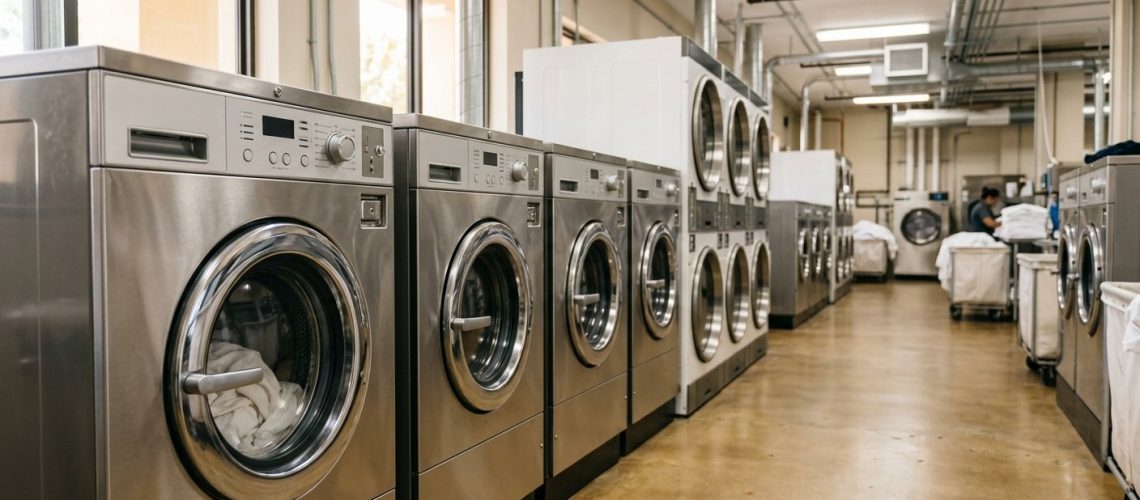
Commercial laundry equipment financing in 2026 gives South Florida business owners—hotels, laundromats, apartment complexes, and healthcare facilities—a path to acquire washers, dryers, and extractors without exhausting operating capital. Lease and loan options typically cover 80–100% of equipment costs, with terms ranging from 24 to 72 months. The right structure depends on your cash flow, tax strategy, and how long you plan to operate the equipment.
- Multiple financing structures exist—equipment loans, leases, and lease-to-own agreements—each with different tax and cash flow implications.
- Refurbished laundry equipment financing is a legitimate and often overlooked option that reduces upfront costs while still providing reliable capacity.
- Hotel laundry equipment financing frequently involves larger capital outlays due to industrial-grade OPL systems; phased acquisition strategies can help manage those costs.
- South Florida’s hospitality and multi-housing markets make commercial laundry a revenue-generating or cost-controlling asset—financing should align with that long-term value.
- Working with a local, factory-authorized supplier gives you better leverage on service agreements and parts availability, which directly affects your financing risk.
Why Financing Commercial Laundry Equipment Makes Business Sense
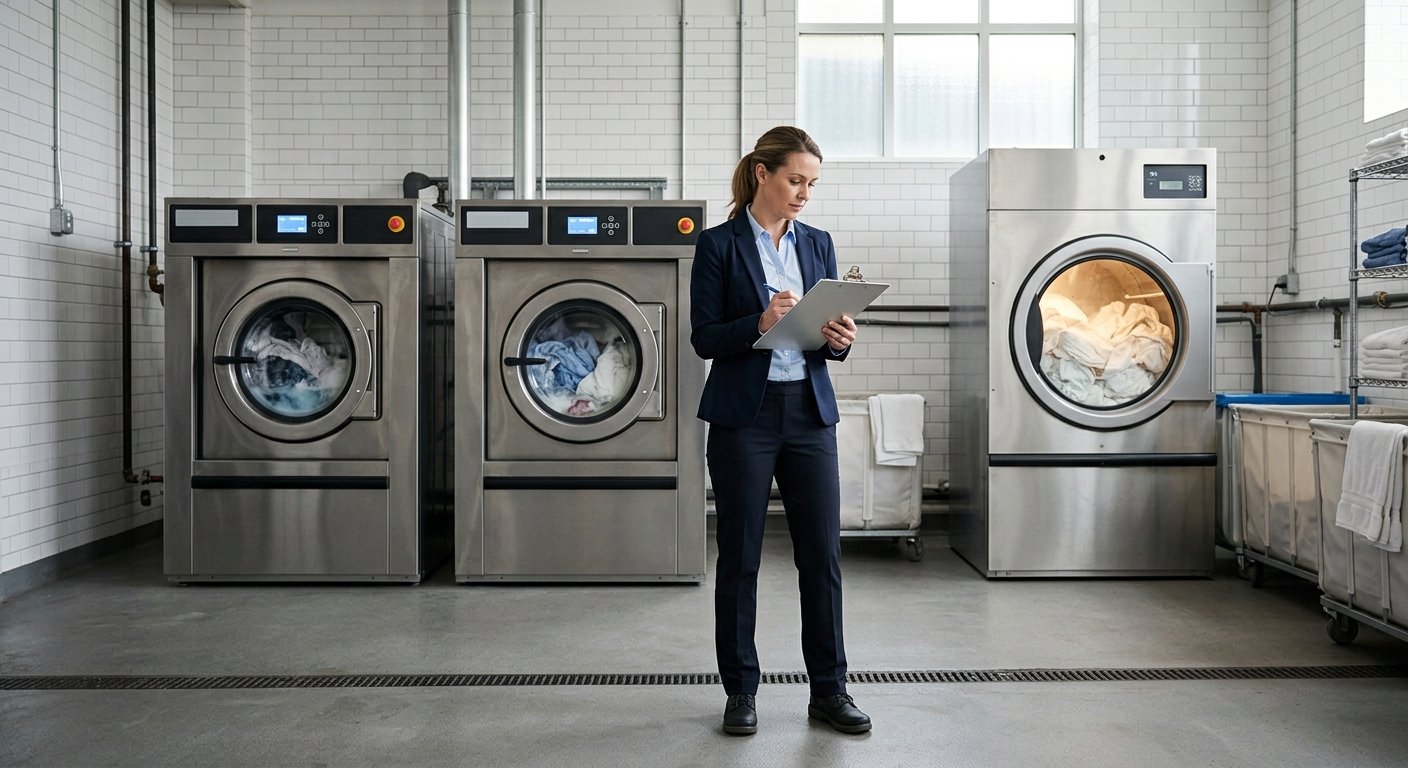
A full commercial laundry equipment installation—whether for an on-premises laundry (OPL) system in a hotel or a multi-washer vended laundromat—represents a significant capital commitment. Commercial laundry equipment prices vary widely based on capacity, brand, and configuration, but even a modest OPL setup can run well into five figures before factoring in installation, ventilation, and utility connections.
Financing allows businesses to preserve working capital for operational priorities: staffing, inventory, marketing, and facility upkeep. Instead of a large lump-sum outlay, you convert a capital expense into a predictable monthly operating cost. For hospitality properties running tight margins and healthcare facilities managing strict budgets, that predictability matters considerably.
There’s also a tax dimension. Under current IRS guidelines, certain equipment financing structures—particularly Section 179 expensing—may allow businesses to deduct the full purchase price of qualifying equipment in the year it’s placed in service, rather than depreciating it over many years. Consult your CPA to determine how this applies to your specific situation, as tax treatment varies by financing type and business structure.
Before you approach a lender, get a formal equipment proposal from your commercial laundry supplier. A detailed quote—including installation, utility modifications, and maintenance agreement costs—gives lenders a complete picture and typically results in faster approvals and better terms.
The Main Financing Structures to Know
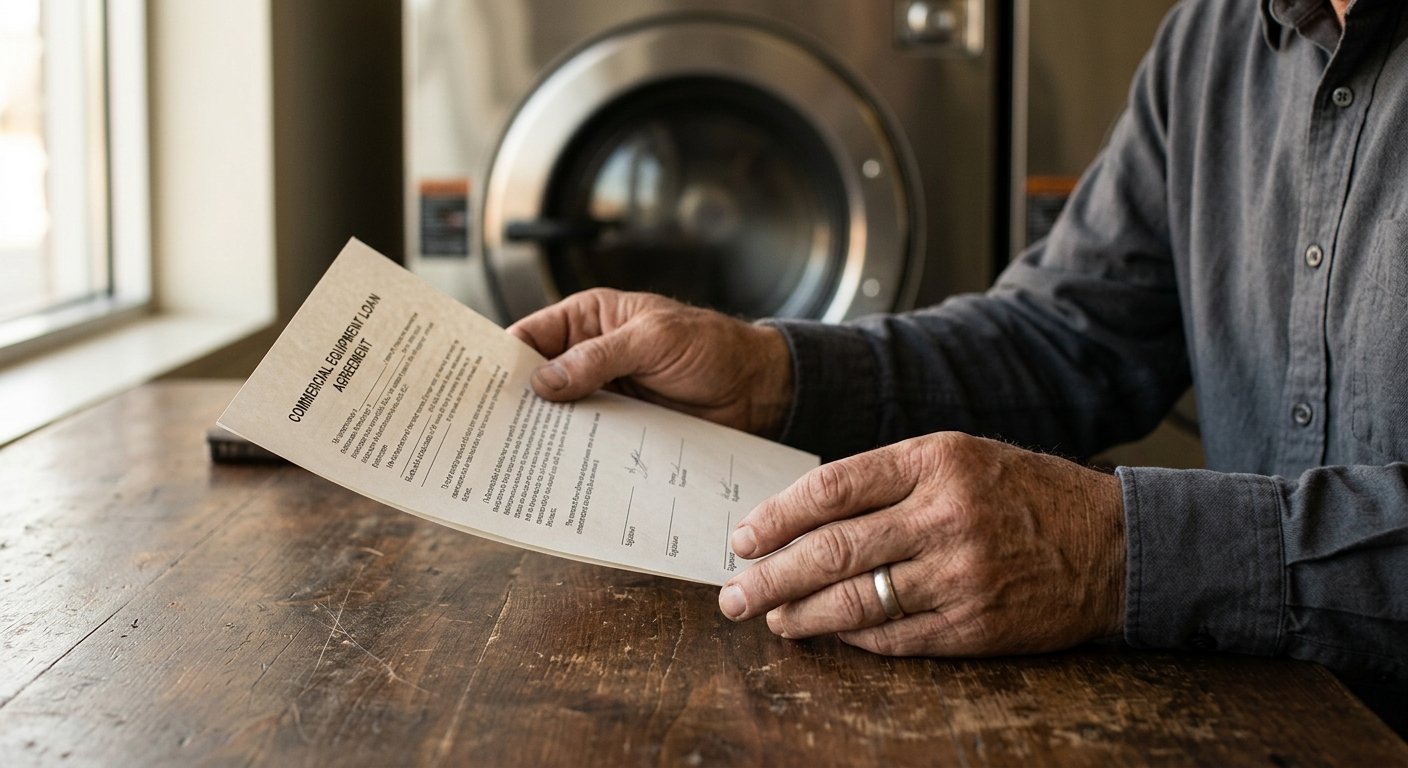
Understanding your options is the first step toward choosing the right structure. These are the three most common paths South Florida businesses use to finance commercial laundry equipment.
Equipment Loans
You borrow the purchase price, take ownership immediately, and repay over a fixed term. The equipment itself typically serves as collateral. You build equity from day one and can depreciate the asset. This works well when you want long-term ownership and have solid credit standing.
Equipment Leases (Operating or Capital)
You make monthly payments to use the equipment over a defined term. At end of lease, you may return, renew, or purchase at fair market value or a predetermined buyout. Operating leases keep equipment off your balance sheet; capital leases function more like a loan. Leasing suits businesses that prefer predictable payments and want flexibility to upgrade.
Lease-to-Own / Conditional Sale Agreements
Structured similarly to a capital lease but with clear ownership transfer at term end—sometimes for as little as one dollar. This approach is popular for laundromat investors who want ownership without the large upfront purchase. Monthly payments are fixed, and ownership is the assumed outcome from the start.
Hotel Laundry Equipment Financing: What’s Different
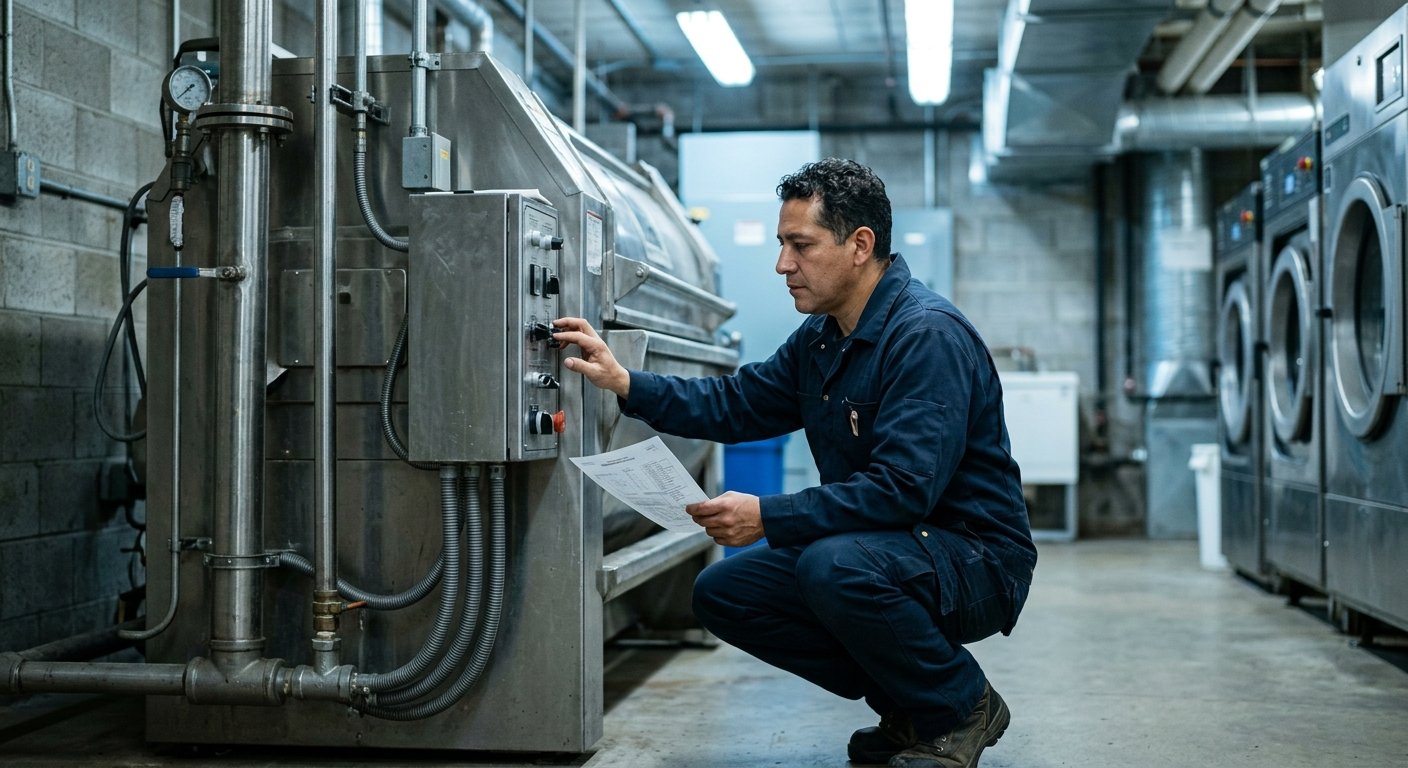
Hotels and hospitality properties have specific demands that affect how their laundry equipment financing is structured. A mid-size hotel in Fort Lauderdale or Boca Raton running an OPL operation needs industrial-grade equipment capable of handling heavy daily loads—think high-G extractors, large-capacity washers, and continuous-batch tunnel systems for larger properties.
These systems carry higher commercial laundry equipment prices than standard OPL setups, and hospitality lenders typically evaluate the deal differently than a retail loan. Key factors include the hotel’s occupancy rates, linen volume projections, and whether the laundry operation replaces an outsourced linen service (which creates a quantifiable cost offset). For hotels transitioning from outsourced laundry to in-house operations, the monthly cost reduction from eliminating linen service contracts is often a compelling part of the financing justification.
Our team has worked with hotel managers and property owners across Palm Beach County, Broward County, and Miami-Dade County on just this type of transition. Learn more about equipment configurations specific to hospitality operations on our hotel laundry equipment page.
Hotel laundry systems often require utility upgrades—gas lines, three-phase electrical, drainage—that aren’t always captured in the equipment quote alone. Make sure your financing covers total project costs, not just the machines, to avoid gaps that stall your installation.
Refurbished Laundry Equipment Financing
Refurbished laundry equipment financing is a practical option that many business owners overlook because they assume lenders won’t finance used equipment. In practice, many lenders do finance refurbished commercial equipment—particularly when it comes with documented service history, factory-authorized reconditioning, and a warranty.
For a new laundromat investor in Delray Beach or a small apartment complex in Boynton Beach, refurbished washers and dryers can deliver reliable performance at a meaningfully lower acquisition cost than new equipment. That lower cost basis reduces the monthly financing payment, which matters considerably when a laundromat is still building its customer base or an apartment property is working through a capital improvement budget.
There are tradeoffs to understand. Refurbished equipment typically carries shorter warranty periods and may have fewer years of useful life remaining. That affects your financing term—you shouldn’t finance refurbished equipment on a 60-month term if the realistic service life is 36 months. A knowledgeable local supplier can help you assess actual condition and match the financing term to realistic longevity.
| Consideration | New Equipment | Refurbished Equipment |
|---|---|---|
| Upfront cost basis | Higher | Lower |
| Warranty coverage | Full manufacturer warranty | Limited; varies by reconditioner |
| Financing term suitability | Up to 60–72 months | Typically 24–48 months |
| Technology / efficiency | Current generation | Depends on age of unit |
| Best fit | Long-term operations, hospitality | Budget-constrained startups, supplemental capacity |
What Lenders Look at When Evaluating Your Application
Commercial equipment lenders aren’t just evaluating your credit score—they’re looking at the full picture of your business’s ability to service the debt. For most South Florida hospitality and multi-housing applicants, the key underwriting factors include:
- Time in business: Most commercial equipment lenders prefer at least two years of operating history. Startup laundromats may face higher rates or require additional collateral.
- Credit profile: Both business and personal credit are typically reviewed for smaller entities and sole proprietors.
- Cash flow documentation: Bank statements and tax returns demonstrate your ability to carry a monthly payment.
- Equipment value and type: Lenders prefer equipment with strong resale value. Well-known commercial laundry brands with established service networks tend to get better terms.
- Down payment: Some programs offer 100% financing; others require 10–20% down. Stronger borrowers usually get more favorable structures.
The U.S. Small Business Administration also offers loan programs—including the SBA 7(a) and SBA 504—that can be applied to equipment purchases. The 504 program in particular is designed for fixed assets and may suit larger laundromat or hospitality equipment investments. These programs involve longer approval timelines but can offer favorable rates for qualifying businesses.
The right financing structure doesn’t just make the purchase possible—it determines whether the equipment generates value or creates strain on your operation for years to come.
The Role of Your Equipment Supplier in the Financing Process
Your choice of equipment supplier has a direct impact on your financing experience—and on your risk exposure over the life of the loan or lease. A supplier with factory-authorized service capabilities and local parts availability reduces the operational risk that lenders (and smart operators) care about: the risk of extended downtime.
When you’re making monthly payments on equipment, that equipment needs to be running. A service partner with factory-authorized credentials and a local South Florida presence means faster response times and OEM parts on hand—not waiting weeks for components to ship from a national warehouse. That’s not a minor point when your hotel’s linen operation or your laundromat’s revenue depends on machines running every day.
As a second-generation, family-owned business serving South Florida for over 55 years, we’ve seen what happens when buyers prioritize the lowest equipment price without accounting for service infrastructure. The payment continues every month whether the machine runs or not. Browse our full commercial laundry equipment offerings to understand what’s available across capacity ranges and brands.
The Coin Laundry Association also offers industry resources for laundromat investors evaluating equipment investments, including financial benchmarking data useful in preparing a financing application.
Frequently Asked Questions
What credit score do I need to finance commercial laundry equipment?
Most commercial equipment lenders look for a minimum personal credit score in the 650–680 range, though terms improve significantly at 700 and above. Business credit history, time in operation, and cash flow documentation matter equally. Startups or borrowers with challenged credit may still qualify through SBA programs or with a larger down payment.
Can I finance refurbished commercial laundry equipment?
Yes, many lenders will finance refurbished commercial laundry equipment, particularly when it’s been reconditioned by a reputable supplier and carries a warranty. Expect shorter financing terms than new equipment—typically 24 to 48 months—and ensure the loan term doesn’t exceed the realistic service life of the units.
Is leasing or buying better for a new laundromat?
It depends on your capital position and long-term goals. Leasing preserves cash flow early in operations when revenue is still building, while buying builds equity in an asset that generates direct revenue. Many new laundromat investors use lease-to-own agreements as a middle path—predictable payments with clear ownership at term end.
How long does commercial laundry equipment financing take to get approved?
Traditional equipment loans through banks or credit unions may take two to four weeks. Many specialized equipment finance companies offer approvals in 24 to 72 hours for straightforward applications under $150,000. SBA-backed loans take significantly longer—often 30 to 90 days—but may offer better terms for larger purchases.
What should I include in a financing application for laundry equipment?
Prepare at least two years of business tax returns, three to six months of bank statements, a detailed equipment quote from your supplier (including installation costs), and your business license or entity documentation. If you’re replacing an outsourced linen contract, include documentation of that current expense—it strengthens the financial case considerably.
Ready to Explore Your Financing Options?
Talk with our team about equipment selection, total project costs, and how other South Florida businesses have structured their laundry equipment investments—we’ll help you ask the right questions before you sign anything.
About Commercial Laundry Equipment Company
Commercial Laundry Equipment Company is a second-generation, family-owned supplier and service provider specializing in commercial laundry equipment for South Florida's hospitality, healthcare, multi-housing, and laundromat sectors. With over 55 years of local experience, CLEC helps business owners and facility managers select, install, and maintain the right equipment for their specific needs—from hardmount washers and high-G extractors to complete OPL and vended laundry systems. Their approach emphasizes long-term value, proper sizing, factory-authorized parts, and responsive local service over lowest-price sales, making them a trusted partner for businesses that depend on reliable laundry operations. Visit commerciallaundryequip.com →