
A professionally refurbished commercial washer can deliver reliable performance at a fraction of new equipment cost—but only if it was properly inspected, rebuilt with OEM parts, and tested before sale. The difference between a smart purchase and a costly headache almost always comes down to due diligence: knowing what to inspect, what questions to ask, and what red flags to walk away from.
- The commercial laundry industry has no single universal standard for “refurbished”—buyers must verify what was actually done to the machine.
- Ask for cycle count documentation and the manufacturer’s rated cycle life; remaining life varies widely.
- A credible refurbisher offers at minimum 90 days of parts and labor warranty, with 6–12 months being a stronger indicator of confidence.
- Total cost of ownership—energy use, maintenance frequency, and downtime risk—matters as much as purchase price.
- For South Florida buyers, local factory-authorized service support is a practical advantage that national online sellers cannot match.
This guide walks you through a practical, experienced-buyer’s checklist for evaluating refurbished commercial laundry equipment before committing your capital. Whether you’re outfitting a hotel laundry room in Fort Lauderdale, replacing aging machines at a Palm Beach County apartment complex, or building out a new laundromat in Miami, these principles apply.
Why Refurbished Can Be a Smart Move—If Done Right
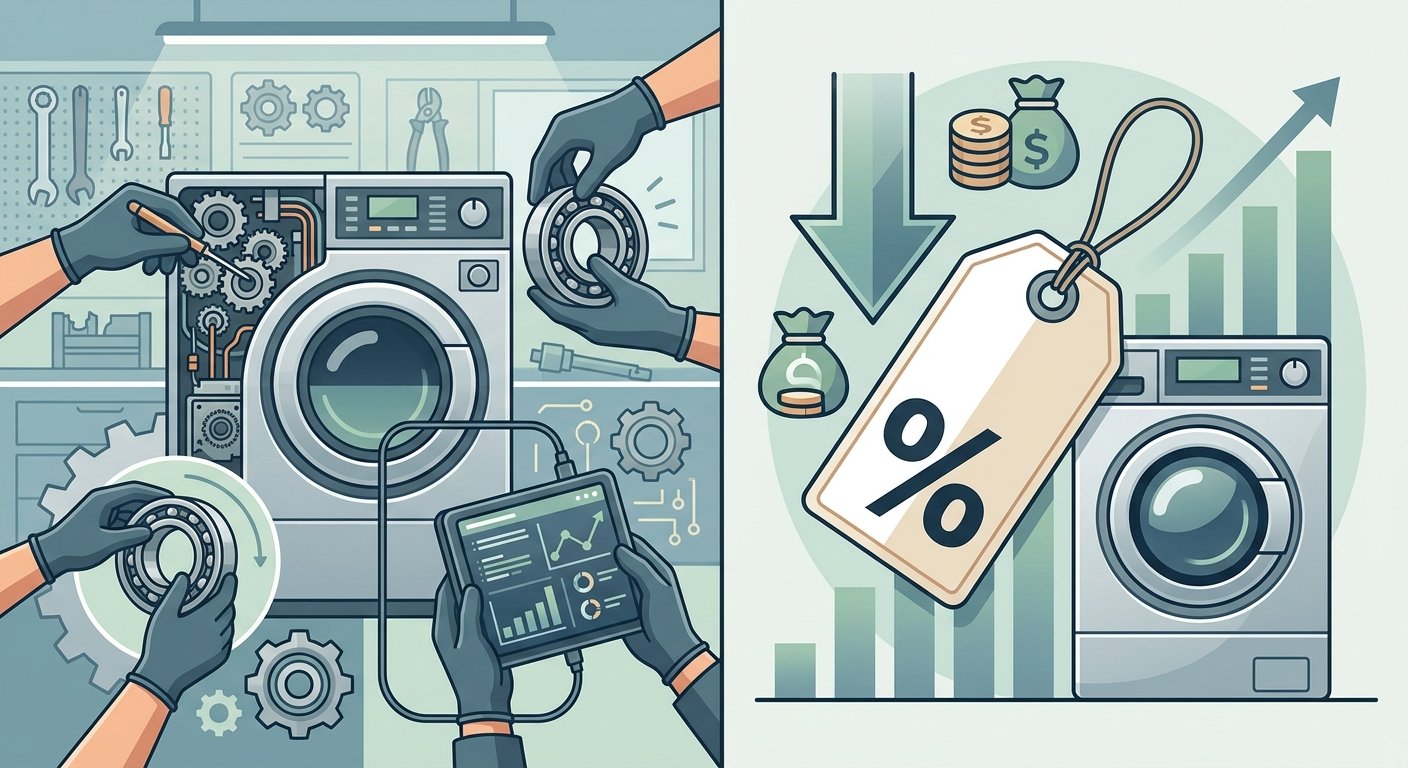
Commercial-grade washers are built for tens of thousands of cycles over many years. When a machine is professionally reconditioned—not just cleaned up and resold—it can deliver reliable performance at a fraction of new equipment cost. The key word is professionally. Certified refurbished laundry equipment that has been inspected, rebuilt with OEM parts, and tested by qualified technicians is a fundamentally different product than surplus equipment that’s been wiped down and listed online.
The commercial laundry industry doesn’t have a single universal standard for “refurbished,” which is exactly why buyers need to do their own due diligence. Understanding what was done to the machine—and what wasn’t—is the foundation of any smart purchase decision.
Because no industry-wide standard defines “refurbished,” two machines sold under the same label can be worlds apart in condition. One may have had every wear component replaced and been load-tested; another may have been wiped down and repriced. Always ask for documentation of what was actually done.
For a broader overview of equipment types and categories, our commercial laundry equipment resource covers the full landscape of what’s available for South Florida businesses.
Step 1: Understand the Machine’s History
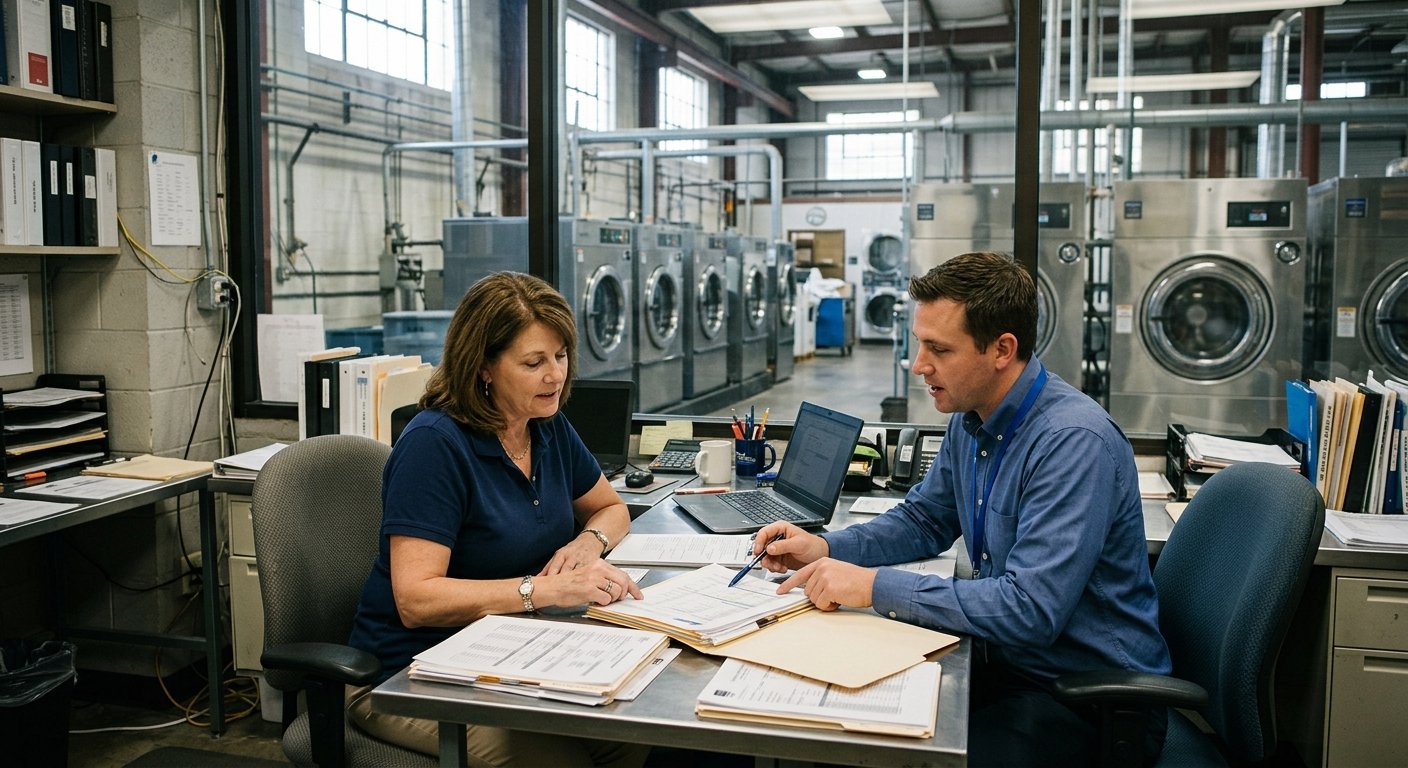
Before you look at anything mechanical, ask for documentation. A reputable seller of refurbished washer extractors should be able to provide:
- The machine’s age and original installation date — Commercial washers have rated cycle lives. A machine with 80,000 cycles on a 100,000-cycle frame is not the same value as one with 20,000 cycles.
- The previous use environment — A washer that spent five years in a hotel processing linens has different wear patterns than one used in a coin laundry. High-use environments accelerate bearing, seal, and drum wear.
- Service and repair records — What was replaced? When? By whom? Legitimate refurbishers document their work.
- Model and serial number verification — Confirm the machine is what the seller claims it is. Cross-reference with manufacturer specifications to confirm cycle ratings and utility requirements.
If a seller can’t or won’t provide this information, that tells you something important about the transaction.
Step 2: Inspect These Critical Components
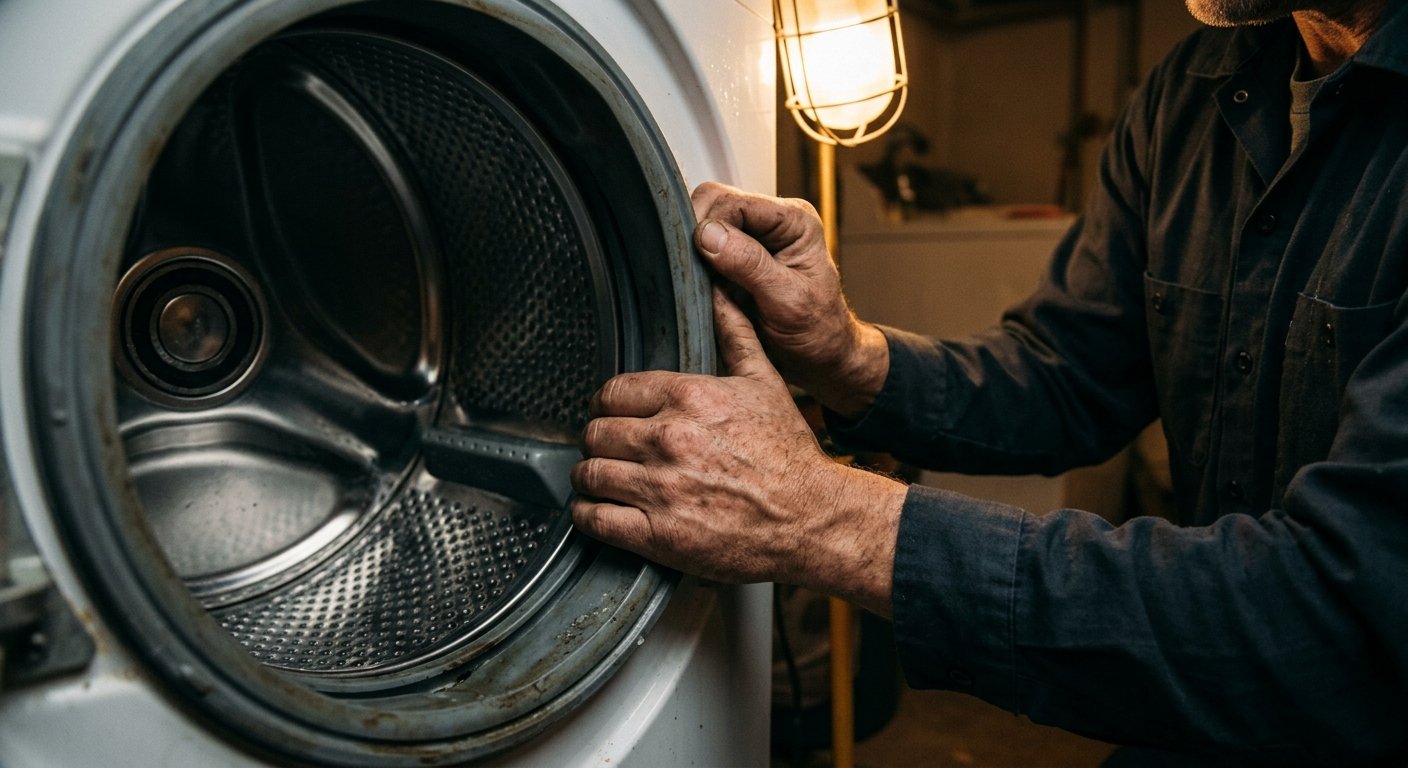
Even if you’re not a technician, a focused visual and operational inspection will reveal a great deal about a machine’s condition.
Bearings and Suspension
Spin the drum by hand and listen. Grinding, rumbling, or resistance suggests worn bearings—a repair that can cost more than the machine is worth on older units. Check the suspension system for wear, cracks, or improper modifications. On refurbished commercial washing machines, bearing replacement is one of the most commonly deferred—and most consequential—repairs.
Seals and Gaskets
Water intrusion is a chronic issue in South Florida’s humid environment. Inspect door seals, pump connections, and hose fittings for cracking, swelling, or evidence of past leaks. Staining or mineral deposits around connection points indicate ongoing or past moisture issues.
Controls and Electronics
Modern commercial washers rely on sophisticated control boards. Ask the seller to demonstrate a full cycle. Watch for error codes, hesitation between cycle phases, or unusual motor behavior. Replacement control boards on older machines can be expensive and sometimes unavailable, effectively making the machine unrepairable.
Motor and Drive System
Listen for smooth motor operation during wash and spin cycles. A wobbling drum, vibration that seems disproportionate to load, or difficulty reaching full extraction speed can indicate drive system wear or imbalance.
Drum and Basket Condition
Inspect the drum interior for rust spots, weld cracks, or damaged baffles. Surface rust can spread and damage linens over time. Cracks in welds are structural concerns that generally cannot be repaired cost-effectively.
Step 3: Verify What “Refurbished” Actually Means
This is where buyers most commonly get misled. Ask the seller directly: what was done to this machine? A legitimate refurbishment for refurbished laundry equipment in South Florida should include at minimum:
- Replacement of high-wear consumables: bearings, seals, belts, hoses, and door gaskets
- Cleaning and inspection of the drain pump and filter system
- Control system testing and, where needed, component replacement
- Full operational test under load conditions
- Cosmetic restoration that doesn’t mask mechanical problems
Ask specifically whether OEM (original equipment manufacturer) parts or aftermarket parts were used. Factory-authorized parts are designed to the machine’s engineering specifications and generally deliver better longevity. At CLEC, our factory-authorized service capability means we source and install OEM parts—a standard that matters whether we’re servicing a new machine or evaluating a refurbished one.
| What to compare | Used (as-is) | Certified Refurbished |
|---|---|---|
| Wear components replaced | No | Yes (bearings, seals, belts, hoses) |
| Operational testing | Rarely | Full cycle test under load |
| Parts documentation | Typically none | OEM parts with records |
| Warranty offered | Typically none | Minimum 90 days parts & labor |
| Reliability outlook | Unknown | Documented remaining life |
According to the U.S. Department of Energy, commercial washers vary significantly in energy and water efficiency depending on age and design. Older machines that haven’t had efficiency components updated may cost more to operate than their purchase price savings suggest.
Step 4: Evaluate the Warranty and Post-Sale Support
A refurbished machine without warranty coverage shifts all risk to the buyer immediately upon purchase. Before you sign anything, understand:
- What warranty is offered? Parts only, or parts and labor? Duration matters—90 days is very different from 12 months.
- Who services the warranty? A warranty backed by a local, factory-authorized service provider carries real value. A warranty backed by a distant seller with no local presence is of limited practical use when a machine goes down during peak operations.
- Parts availability going forward — Ask whether replacement parts are still being manufactured for this model. For machines older than 10–12 years, parts availability can become a limiting factor in the machine’s useful life.
A warranty backed by a local, factory-authorized service provider carries real value—a warranty backed by a distant seller with no local presence is of limited practical use when a machine goes down during peak operations.
This is one area where working with an established local provider—rather than buying from an online reseller—provides meaningful protection. When you have a trusted service partner in the same region, response time and accountability are fundamentally different.
Step 5: Consider Total Cost of Ownership, Not Just Purchase Price
A $3,000 refurbished washer that runs reliably for five years with modest maintenance costs may represent better value than a $2,000 unit that requires $1,500 in repairs within the first year. The math on refurbished equipment always needs to account for:
- Expected remaining useful life based on age and cycle count
- Energy and water consumption relative to newer models
- Likely maintenance frequency based on component condition at purchase
- Downtime cost if the machine fails during a critical period
The Coin Laundry Association provides educational resources on laundromat operational economics that apply broadly to any business managing commercial laundry throughput. Understanding throughput efficiency is as important as equipment cost when evaluating refurbished units.
Our detailed guide on used and refurbished commercial laundry equipment covers additional considerations for buyers evaluating these options across South Florida markets.
For machines older than 10–12 years, confirm that replacement parts are still being manufactured. If key components are no longer available, even a well-reconditioned unit can become unrepairable at the next major failure—regardless of how it looks or runs today.
South Florida-Specific Considerations
Buyers in the South Florida market face some unique factors. Humidity accelerates corrosion on machines that weren’t stored properly between uses. Hard water in certain parts of Palm Beach and Broward counties can leave mineral deposits that affect heating elements and internal components on older machines. And the hospitality sector’s demand cycles—particularly seasonal peaks in Miami-Dade and Monroe County—mean that equipment reliability isn’t an abstract concern; a machine failure in peak season has real revenue consequences.
If you’re evaluating refurbished commercial laundry equipment for a hotel, healthcare facility, or multi-housing property in South Florida, factor in how quickly local service support can respond if something goes wrong. Having factory-authorized service available locally in the West Palm Beach to Miami corridor is a practical advantage that national online sellers simply can’t match.
Frequently Asked Questions
What is the difference between refurbished and used commercial laundry equipment?
Used equipment has been operated and resold with little or no reconditioning. Refurbished equipment has been inspected, repaired, and tested—ideally with replaced wear components and documentation of the work performed. The distinction matters significantly for reliability and total cost of ownership.
How many cycles can a refurbished commercial washer typically handle?
It depends on the machine’s age, original cycle rating, and what was replaced during refurbishment. Check the manufacturer’s rated cycle life for that model. A properly refurbished machine with rebuilt bearings and seals can have substantial remaining life, but buyers should ask for cycle count documentation before purchasing.
Is it worth buying refurbished laundry equipment for a laundromat?
It can be, particularly for secondary machines or in situations where capital constraints are real. The key is sourcing from a reputable provider who offers documentation, OEM parts, and post-sale service support. A laundromat depends on machine uptime for revenue, so reliability and service access should factor heavily into the decision.
What warranty should I expect on certified refurbished laundry equipment?
A credible refurbisher should offer at minimum 90 days of parts and labor coverage, with 6–12 months being a stronger indicator of confidence in their work. Always confirm who backs the warranty and whether local service support is available.
Should I buy refurbished or new commercial laundry equipment?
New equipment offers known remaining useful life, manufacturer warranty, and current energy efficiency. Refurbished equipment can offer meaningful upfront savings if sourced carefully. The right answer depends on your budget, operational demands, available service support, and how long you plan to operate the equipment. A qualified local equipment advisor can help you run the numbers for your specific situation.
Ready to Make a Confident Decision?
Evaluating refurbished commercial laundry equipment isn’t complicated when you know what to look for—but it does require asking the right questions and working with sellers who can answer them. At Commercial Laundry Equipment Company, we’ve been helping South Florida businesses navigate exactly these decisions for over 55 years. As a second-generation, family-owned operation with factory-authorized service capability, we serve West Palm Beach, Boca Raton, Miami, Fort Lauderdale, and everywhere in between.

About Commercial Laundry Equipment Company
Commercial Laundry Equipment Company is a second-generation, family-owned supplier and service provider specializing in commercial laundry equipment for South Florida's hospitality, healthcare, multi-housing, and laundromat sectors. With over 55 years of local experience, CLEC helps business owners and facility managers select, install, and maintain the right equipment for their specific needs—from hardmount washers and high-G extractors to complete OPL and vended laundry systems. Their approach emphasizes long-term value, proper sizing, factory-authorized parts, and responsive local service over lowest-price sales, making them a trusted partner for businesses that depend on reliable laundry operations. Visit commerciallaundryequip.com →