
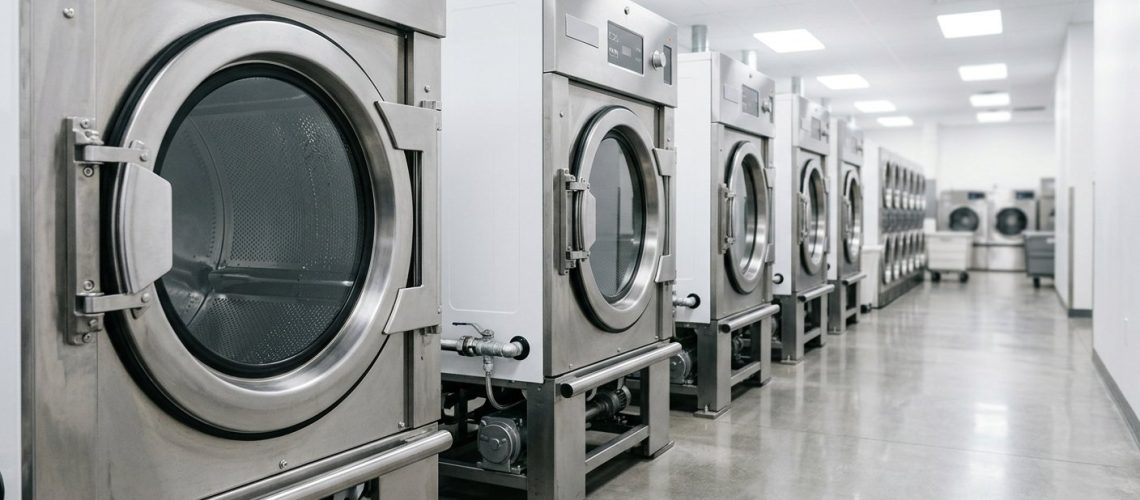
The right commercial washer extractor depends on your linen volume, building infrastructure, available floor space, and how critical uptime is to your operation. For most South Florida hospitality, healthcare, and multi-housing facilities, the decision comes down to machine capacity, mounting type, and extraction G-force—three factors that directly determine throughput, utility costs, and long-term reliability.
- Capacity sizing is the most common mistake buyers make—undersized machines create costly bottlenecks; oversized ones waste energy and water.
- Softmount washers absorb vibration internally and can be installed on upper floors; hardmount machines require a reinforced concrete slab.
- Higher G-force extraction removes more moisture before drying, directly reducing gas or electric drying costs.
- South Florida’s humidity and building constraints make proper equipment specification more important here than in most markets.
- Factory-authorized service and local parts availability protect your investment long after installation day.
Why Equipment Selection Matters More Than Price
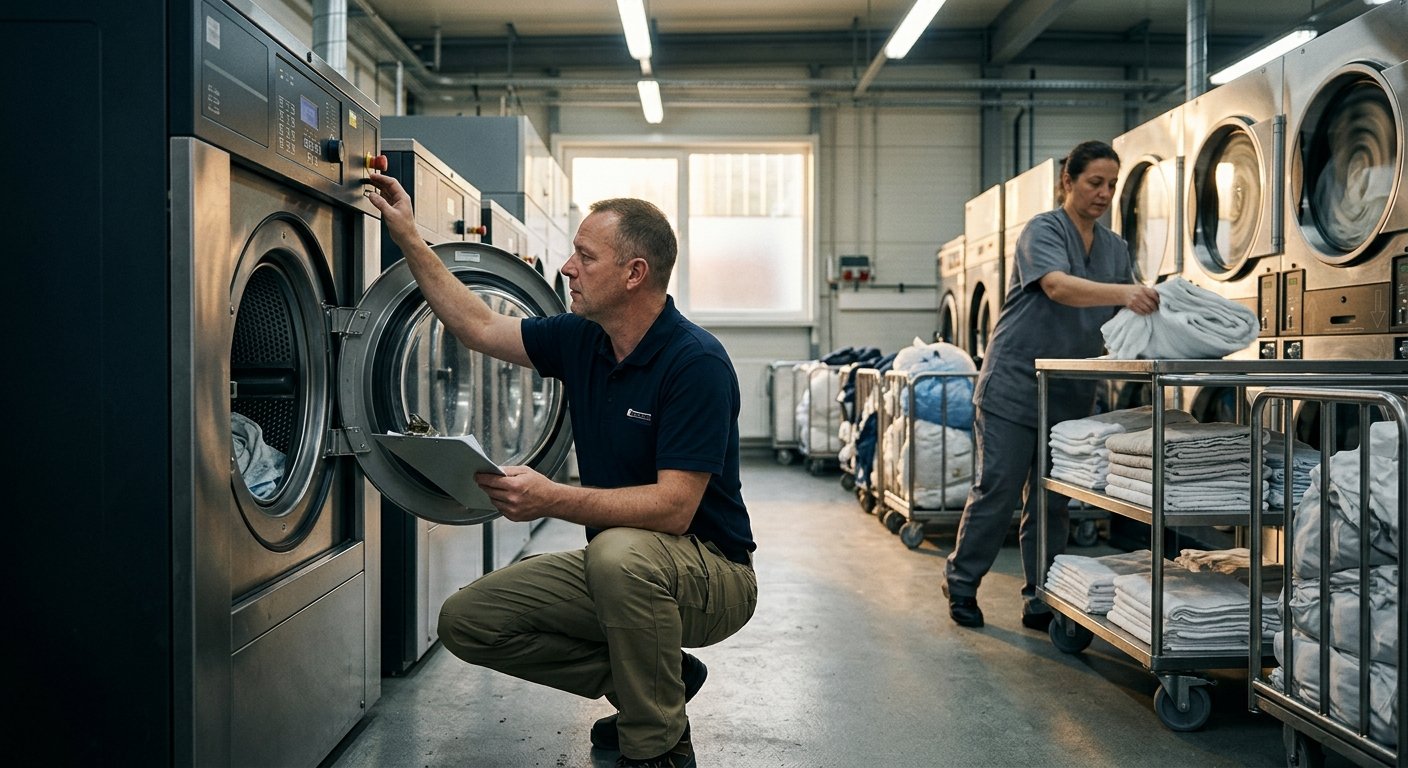
Many buyers focus on the purchase price and overlook the total cost of ownership. A commercial laundry machine that runs eight to twelve hours a day, six or seven days a week, will either pay for itself through efficiency or drain your operation through downtime and excessive utility consumption. The wrong capacity, the wrong mounting type, or the wrong programming for your linen mix can turn a reasonable equipment investment into a persistent operational headache.
This is especially true in South Florida, where hotels and resorts run high year-round occupancy, healthcare facilities handle infection-control linen standards, and multi-housing operators need machines tough enough to handle heavy tenant use without constant service calls. Getting the specification right from the start is what separates a smart capital investment from an expensive lesson.
Over more than 55 years serving South Florida businesses, we’ve found that the most common and costly equipment mistake isn’t buying the wrong brand—it’s buying the wrong capacity for the actual workload. A site assessment before purchase prevents that problem entirely.
Step One: Calculate Your True Linen Volume
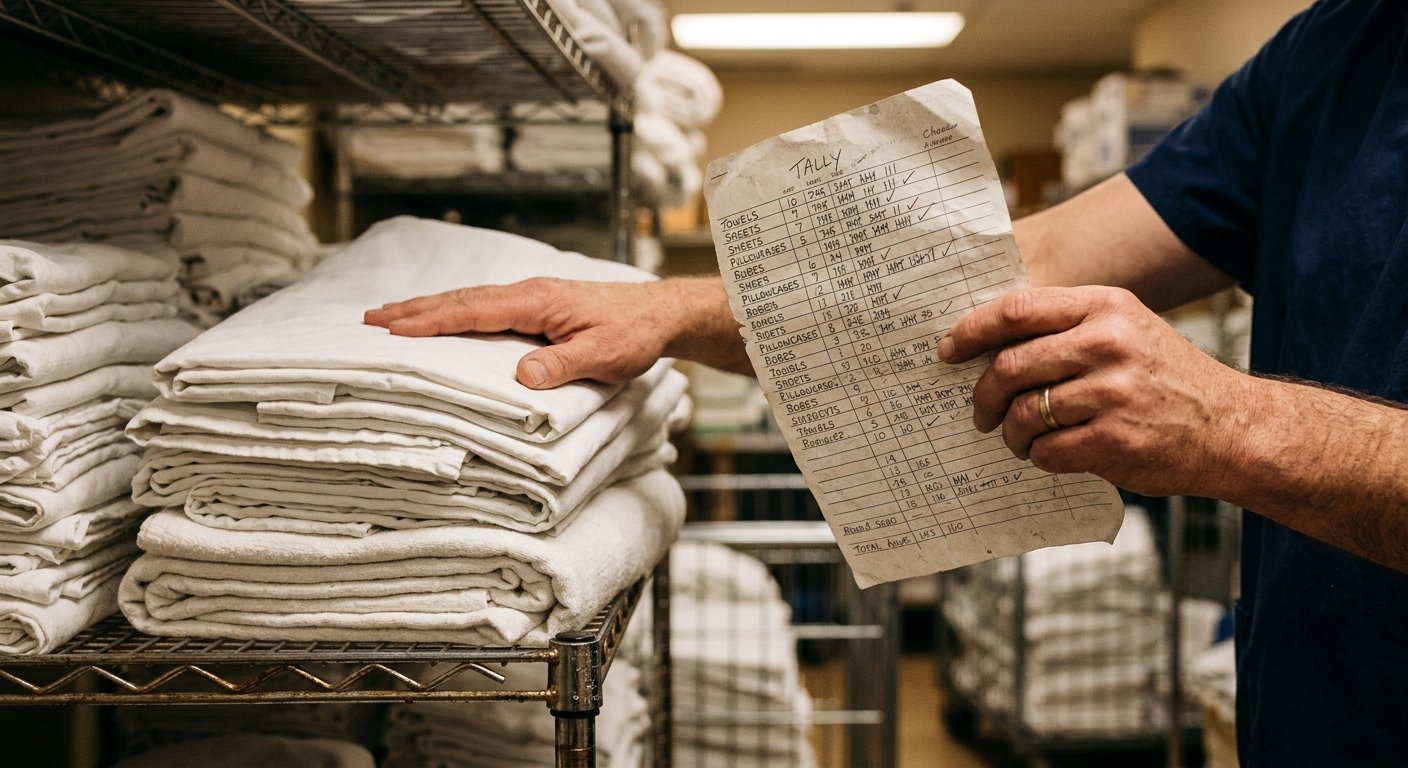
Before you look at a single machine spec sheet, determine how many pounds of linen your operation processes per day—and how many hours you have to process it. Hotels typically calculate based on room count and occupancy rates. Healthcare and assisted living facilities factor in resident counts and linen categories. Laundromats size around customer demand patterns and vend cycle times.
From that daily pound figure, you work backward to the machine capacity and number of units needed. A common rule of thumb is to plan for some spare capacity—if your peak daily requirement is 800 pounds and your machines can process exactly 800, you have no buffer for busy seasons, machine downtime, or linen delays. Building in 20–25% headroom is sound planning, not over-buying.
Audit your linen mix
List every linen category (sheets, towels, uniforms, table linens) and estimate daily pounds by category. Different fabrics require different cycle parameters.
Determine your processing window
How many hours per day can laundry run? A hotel with a six-hour housekeeping window needs more machine capacity than one with a twelve-hour operation.
Add capacity buffer
Size for your peak load, not your average. Factor in seasonal occupancy swings, which are significant across South Florida’s tourism-driven economy.
Match machine size to space and utilities
Confirm that your electrical service, water supply, drain capacity, and floor space support the machine configuration you need before committing.
Hardmount vs. Softmount: A Critical Structural Decision
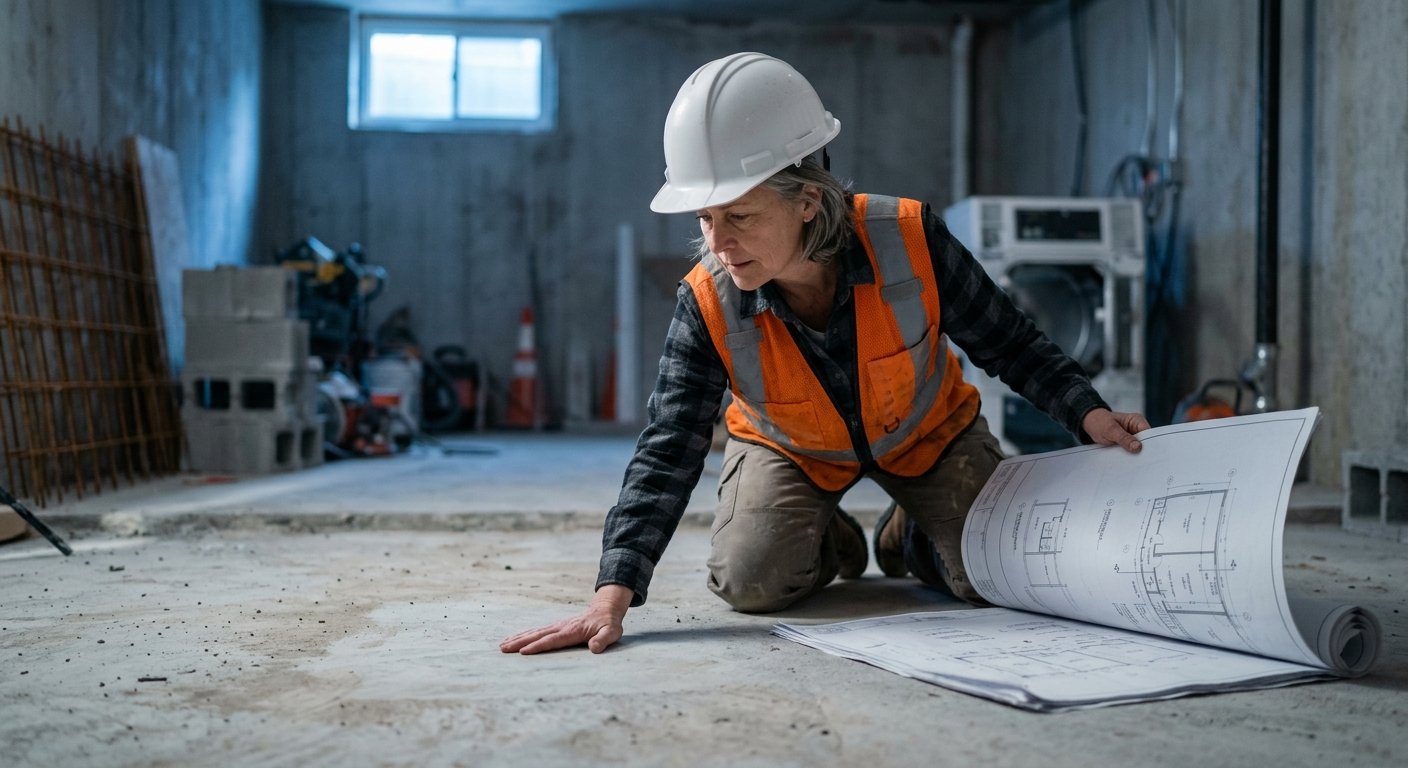
This is one of the most consequential decisions in commercial laundry equipment selection, and it’s determined largely by your building, not your preference.
Hardmount washers are bolted directly to the floor. They require a reinforced concrete slab capable of handling significant vibration forces during the high-speed extraction cycle. In ground-floor laundry rooms with appropriate slab construction, hardmount machines are reliable workhorses. They generally cost less upfront than comparable softmount models.
Softmount washers have internal suspension systems that absorb extraction vibration. This allows installation on upper floors, wood-frame structures, and buildings where a reinforced slab isn’t feasible. For South Florida hotels with rooftop or upper-floor laundry facilities, or multi-story apartment buildings with distributed laundry rooms, softmount machines are often the only practical option. They also extract at higher G-forces, which we’ll cover next.
| Factor | Hardmount | Softmount |
|---|---|---|
| Floor requirement | Reinforced concrete slab | Any floor, including upper levels |
| Extraction G-force | Typically lower | Up to 400G or higher |
| Installation flexibility | Ground floor primarily | Upper floors, wood-frame buildings |
| Upfront cost | Generally lower | Generally higher |
| Moisture removal | Good | Excellent — reduces drying time |
Understanding G-Force Extraction
G-force is the measure of centrifugal force applied during the extraction spin cycle. Higher G-force removes more water from the linen load before it ever enters the dryer. According to the U.S. Department of Energy’s guidance on commercial laundry operations, reducing residual moisture content in washed goods is one of the most effective ways to lower dryer energy consumption—dryers are typically the largest energy cost in a commercial laundry operation.
A machine extracting at 200G versus one operating at 400G will leave significantly more moisture in the load. That moisture has to be removed by heat in the dryer, which costs money on every cycle, every day, for the life of the equipment. For high-volume operations—hotels processing hundreds of pounds of linens daily, hospitals with strict turnaround requirements—the efficiency difference compounds quickly. This is why investing in higher G-force extraction capacity often makes strong financial sense over the equipment’s lifespan, even when the upfront cost is higher.
If you’re replacing older equipment, compare the G-force rating on your current machines to modern alternatives. The gap is often substantial—and it translates directly to lower utility bills from day one of operation.
Matching Equipment to Your Business Type
Different South Florida operations have genuinely different needs, and the best equipment for a hotel is not automatically the best equipment for a laundromat or an assisted living facility.
Hotels and Resorts
Throughput and linen quality are the twin priorities. Hotels need machines that can process high volumes of sheets, towels, and terry goods quickly without damaging fabric. Programmable controls that allow precise wash formulas for different linen categories are important. Our hotel laundry equipment resource covers the full OPL (on-premises laundry) consideration set for hospitality operations.
Healthcare and Assisted Living
Infection control standards require specific wash temperatures and cycle parameters. The CDC’s guidelines on healthcare laundry outline temperature and processing requirements for healthcare textiles. Machines must be capable of meeting these standards consistently, with programmable controls that prevent operator shortcuts.
Multi-Housing and Apartment Communities
Durability and ease of use are paramount. Tenant-facing machines take abuse, and vended or card-operated systems add payment collection considerations. Coin and card-operated commercial laundry machines designed for multi-housing have different controls and construction than OPL equipment.
Laundromats
Vended laundry operations have unique requirements: payment systems, multi-load capacity options, and machines tough enough for continuous public use. Speed Queen washer extractors have long been a go-to choice in this segment for durability and serviceability—you can explore the full range through our Speed Queen commercial equipment overview.
The Service and Parts Equation
A commercial washer extractor that goes down during peak season doesn’t just create a laundry backlog—it creates a guest experience problem, a staff problem, and potentially an outsourcing expense that exceeds the cost of a service call many times over. Equipment selection and service access are inseparable decisions.
Factory-authorized service matters because technicians have completed manufacturer training, have access to OEM parts, and carry the documentation needed to service equipment correctly. Generic repair is fine for simple fixes; for complex electronic controls or precision mechanical components, factory-authorized expertise protects the machine and preserves any remaining warranty coverage. Local parts availability—meaning a service provider who stocks common components in South Florida rather than ordering from a national warehouse—is what determines whether a repair takes a day or a week.
Equipment selection and service access are inseparable decisions—the best machine on the market is only as reliable as the service network behind it.
For a deeper look at the full range of commercial laundry equipment options available for South Florida businesses, our commercial laundry equipment resource covers washers, dryers, and complete system configurations across major commercial applications.
Frequently Asked Questions
What capacity commercial washer extractor do I need for my operation?
Capacity is determined by your daily linen volume in pounds and the number of hours available to process it. Start by auditing your actual linen output, then size machines to handle your peak load with a buffer for busy periods. A site assessment with an experienced equipment consultant is the most reliable way to reach the right number.
Can I install a commercial washer on an upper floor?
Softmount washers are designed for upper-floor installation because their internal suspension systems absorb extraction vibration. Hardmount machines require a reinforced concrete slab and are typically limited to ground-floor installations. A structural review of your specific building is necessary before specifying either type in an upper-floor application.
How important is G-force extraction for my laundry operation?
Very important for any high-volume operation. Higher G-force extraction removes more moisture before drying, which reduces dryer run time and energy consumption on every cycle. For operations running many loads daily, the utility savings over the life of the equipment can be substantial—making higher G-force machines a strong long-term value even at higher upfront cost.
What’s the difference between OPL and vended laundry systems?
OPL (on-premises laundry) systems are staff-operated, typically used in hotels, hospitals, and similar facilities processing their own linen. Vended laundry systems are customer-facing, coin or card-operated machines used in laundromats and multi-housing common areas. Equipment construction, controls, and payment systems differ significantly between the two categories.
Why does factory-authorized service matter for commercial laundry equipment?
Factory-authorized technicians receive manufacturer training and have access to genuine OEM parts and technical documentation. This matters for accurate diagnostics, proper repairs, and preserving warranty coverage. Local factory-authorized service—meaning a provider with parts and technicians in South Florida—also means faster response time when a machine goes down during peak operations.
Ready to Specify the Right Equipment for Your Operation?
Tell us about your facility and linen volume, and we’ll help you identify the right commercial washer extractor configuration for your South Florida business—no pressure, just straightforward guidance from a team that’s been doing this for over 55 years.

About Commercial Laundry Equipment Company
Commercial Laundry Equipment Company is a second-generation, family-owned supplier and service provider specializing in commercial laundry equipment for South Florida's hospitality, healthcare, multi-housing, and laundromat sectors. With over 55 years of local experience, CLEC helps business owners and facility managers select, install, and maintain the right equipment for their specific needs—from hardmount washers and high-G extractors to complete OPL and vended laundry systems. Their approach emphasizes long-term value, proper sizing, factory-authorized parts, and responsive local service over lowest-price sales, making them a trusted partner for businesses that depend on reliable laundry operations. Visit commerciallaundryequip.com →