
The price tag on commercial laundry equipment can hit hard when you’re staring at a quote for $150,000 or more. For South Florida businesses—whether you’re opening a laundromat in Coral Springs, upgrading your Miami hotel’s laundry room, or replacing aging machines at a Fort Lauderdale nursing home—the question isn’t just about which equipment to buy, but how to pay for it without draining your operating capital.
Understanding commercial laundry equipment financing options has become more sophisticated in 2026, with multiple pathways that can preserve your cash flow while getting the high-performance machines your operation needs. The right financing structure can mean the difference between a smart business investment and a costly mistake.
Why Commercial Laundry Equipment Financing Makes Business Sense
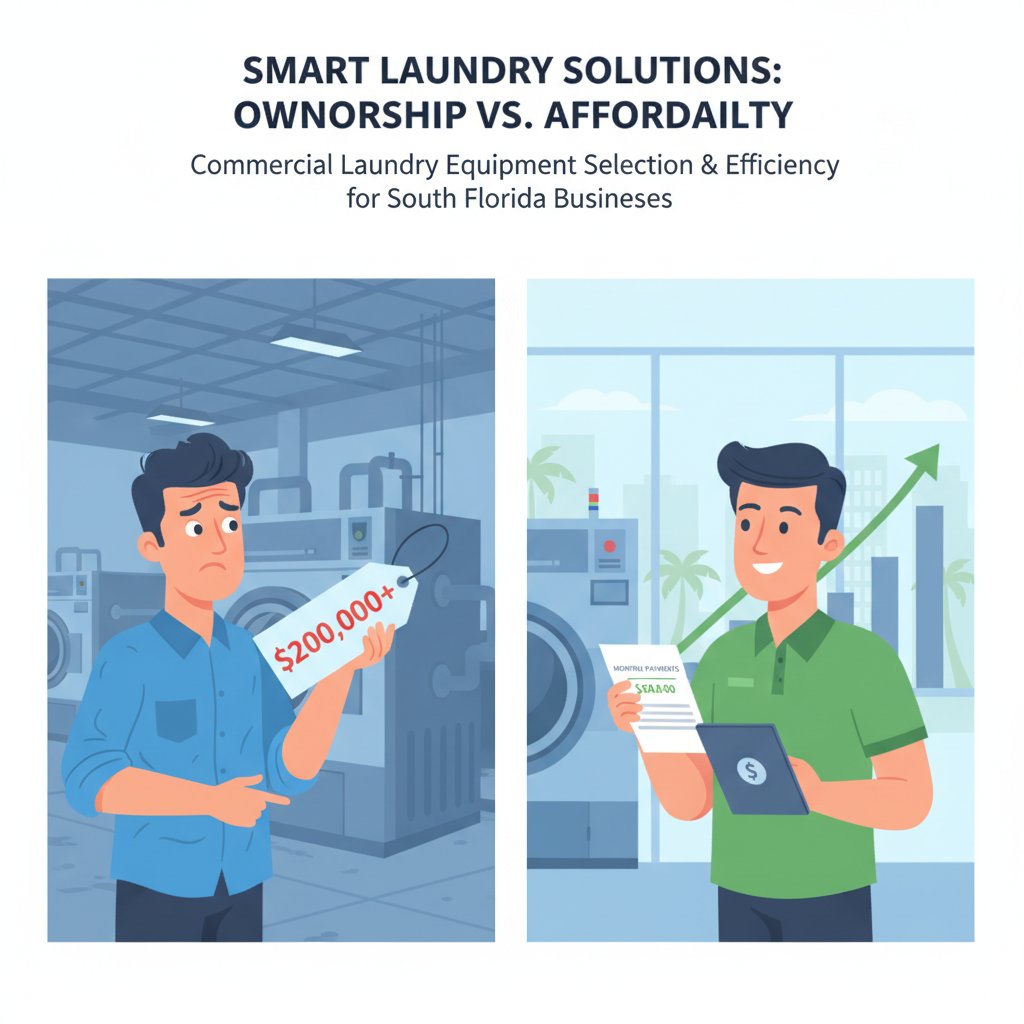
Commercial laundry machines represent a significant capital investment. A single hardmount washer-extractor can run $15,000 to $35,000, while complete on-premise laundry (OPL) installations for hospitals or hotels easily exceed $200,000. Even smaller operations face substantial costs when purchasing business laundry equipment that meets today’s efficiency standards.
Financing preserves working capital for other critical needs—payroll, marketing, inventory, or emergency repairs. It also aligns your payment structure with revenue generation. When your equipment starts producing income from day one, financing lets you pay for it with the revenue it generates rather than depleting savings.
The tax advantages matter too. Section 179 deductions and bonus depreciation provisions in 2026 can offset significant portions of equipment costs, though specific benefits depend on your business structure and overall tax situation. Many businesses find that monthly financing payments, combined with tax benefits, create a more favorable cash position than outright purchase.
Traditional Equipment Financing and Loans
Traditional equipment financing remains the most straightforward option for established businesses with solid credit profiles. Banks and specialized equipment lenders offer loans specifically structured for commercial laundry equipment purchases.
These loans typically require 10-20% down payment, with terms ranging from three to seven years. Interest rates in 2026 vary based on creditworthiness, but businesses with strong financial histories often secure competitive rates. The equipment itself serves as collateral, which generally makes these loans easier to obtain than unsecured business loans.
The advantage here is simple: you own the equipment from day one. Once the loan is satisfied, you have no further payments. For businesses planning long-term operations—a 20-year laundromat investment or a permanent hotel laundry facility—ownership builds equity and reduces long-term costs.
However, approval requirements can be stringent. Lenders typically want to see two years of financial statements, strong credit scores (usually 680+), and proof of stable revenue. Newer businesses or those with credit challenges may find traditional financing difficult to access.
Equipment Leasing: Operating vs Capital Leases
Leasing provides flexibility that traditional loans don’t offer, particularly valuable in an industry where technology and efficiency standards continue evolving. Two main lease structures dominate the commercial laundry equipment market.
Operating Leases
Operating leases function more like long-term rentals. You make monthly payments for equipment use but don’t own it. At lease end, you typically return the equipment, upgrade to newer models, or purchase at fair market value.
This structure appeals to businesses that want the latest technology without long-term commitment. A laundromat owner might prefer operating leases to upgrade to more efficient machines every five years, maintaining competitive advantage with the newest high-efficiency models that reduce utility costs and attract customers.
Operating leases often appear as operating expenses rather than debt on financial statements, which can improve certain financial ratios important for other business purposes. Monthly payments may be fully deductible as business expenses, offering predictable budgeting.
Capital Leases
Capital leases more closely resemble financed purchases. You make payments over a set term with the expectation of ownership at the end, often for a nominal buyout amount ($1 or 10% of original value).
These leases build equity while spreading costs over time. For businesses committed to specific commercial laundry equipment for the long haul, capital leases offer the benefits of ownership without the upfront capital requirement. The equipment appears as an asset on your balance sheet, and you claim depreciation benefits.
Approval requirements for leases are often more flexible than traditional loans, making them accessible to newer businesses or those rebuilding credit.
Manufacturer and Distributor Financing Programs
Many commercial laundry equipment manufacturers and authorized distributors offer financing programs designed specifically for their products. These programs often provide competitive advantages over generic equipment financing.
Factory-backed financing may include promotional periods with deferred payments or reduced interest rates. A manufacturer might offer six months same-as-cash or significantly reduced rates during promotional periods, creating opportunities for substantial savings.
These programs typically feature streamlined approval processes since the lender specializes in commercial laundry equipment and understands its value retention and revenue-generating capacity. They may also bundle installation, training, and initial service contracts into the financing package, simplifying the acquisition process.
The relationship between equipment and financing source matters. When your distributor has skin in the game through financing, they’re often more invested in your success. They want you to succeed with their equipment, encouraging responsive service and support.
When evaluating commercial laundry equipment south florida businesses should look for distributors with factory authorizations and local service presence—these relationships often unlock better financing terms while ensuring parts availability and rapid service response.
SBA Loans for Laundromat and Equipment Purchases
Small Business Administration loan programs, particularly SBA 7(a) and 504 loans, can finance commercial laundry equipment purchases, especially when combined with real estate acquisition or major facility improvements.
SBA 7(a) loans offer amounts up to $5 million with terms up to 25 years for real estate and 10 years for equipment. These loans can cover a complete laundromat startup—building purchase or lease improvements, all equipment, and working capital. Interest rates typically run lower than conventional loans, and longer terms mean lower monthly payments.
SBA 504 loans specifically target equipment and real estate purchases for growing businesses. They structure as two loans: 50% from a conventional lender, 40% from a Certified Development Company, and 10% borrower down payment. This structure can finance major commercial laundry equipment installations with less money down than traditional loans require.
The tradeoff is complexity. SBA loans involve more paperwork, longer approval timelines (often 60-90 days), and stricter eligibility requirements. However, for substantial investments—a complete hotel laundry renovation or new laundromat opening—the favorable terms justify the effort.
Alternative Financing: What to Consider Carefully
When traditional paths aren’t available, alternative financing options exist, but they require careful evaluation.
Equipment financing companies that specialize in challenged credit situations can approve deals traditional lenders decline. However, expect significantly higher interest rates—sometimes 15-25% compared to 6-10% for prime borrowers. Calculate total cost carefully. That $100,000 equipment package might cost $140,000 over five years at higher rates.
Revenue-based financing ties payments to business revenue, offering flexibility during seasonal fluctuations. This can work for laundromats in tourist-heavy areas where winter revenue spikes and summer slows. However, total costs typically exceed conventional financing.
Business credit cards and lines of credit might cover smaller purchases—a few replacement washers or dryers—but rates are usually unfavorable for large equipment investments. Reserve these for short-term needs or emergencies, not major equipment packages.
Evaluating True Cost: Beyond Monthly Payments
Commercial laundry equipment prices vary widely based on capacity, features, and efficiency ratings. A 60-pound capacity washer-extractor might range from $18,000 to $35,000 depending on extraction G-force, programmability, and efficiency features. But purchase price tells only part of the story.
When comparing financing options, calculate total cost of ownership. A lower monthly payment stretched over seven years might cost significantly more than higher payments over four years. Run complete amortization scenarios.
Factor in operating costs too. Higher-efficiency equipment costs more upfront but reduces utility bills substantially. In South Florida’s climate where cooling costs already run high, heat recovery systems and low-moisture-retention extraction can impact your bottom line significantly. Energy-efficient commercial laundry machines might cost 20% more but reduce operating costs by 30-40%, potentially justifying premium financing terms.
Consider service and parts availability. The cheapest equipment option might use proprietary parts with limited availability, creating extended downtime when repairs are needed. Equipment from established manufacturers with strong South Florida distributor networks typically maintains value better and ensures OEM parts accessibility—factors that matter both for operations and for lenders evaluating collateral value.
Structuring Your Financing for Success
Match financing terms to equipment lifespan and business plans. Commercial laundry equipment typically operates effectively for 10-15 years with proper maintenance. Financing beyond seven years often means you’re paying for equipment approaching end-of-life while potentially needing replacement.
Consider staggered purchases if budget allows. Financing part of your equipment package while purchasing some machines outright can reduce total interest paid while still preserving working capital. A hotel might finance heavy-duty washer-extractors while paying cash for less expensive dryers.
Build service agreements into your financial planning. Preventive maintenance extends equipment life and prevents costly breakdowns. Some financing packages include service contracts; others don’t. Either way, budget for regular maintenance. The cost is minimal compared to revenue lost during unexpected downtime.
Questions to Ask Before Signing Financing Documents
Before committing to commercial laundry equipment financing, clarify these critical points:
- What’s the total cost? Don’t focus only on monthly payments. Calculate total interest paid over the entire term.
- Are there prepayment penalties? If business grows faster than expected, can you pay off financing early without fees?
- What happens if equipment fails? Does financing include service coverage, or are you responsible for repairs while still making payments?
- Can you add equipment later? As business grows, can additional machines be added to existing financing, or will you need separate agreements?
- What are end-of-term options? For leases, understand buyout terms, return conditions, and upgrade paths.
- Are installation and training included? These costs add up. Clarify what’s covered in the financed amount.
Moving Forward With Your Equipment Investment
The right financing structure for business laundry equipment depends on your specific situation—business age, credit profile, cash position, and long-term plans. Established businesses with strong credit often benefit most from traditional equipment loans or capital leases that build equity. Newer operations might find manufacturer financing or SBA loans more accessible. Those prioritizing flexibility and technology upgrades might prefer operating leases.
Don’t rush the decision. Commercial laundry equipment represents a multi-year commitment affecting daily operations and profitability. Take time to compare not just financing terms but equipment quality, service support, and efficiency ratings. The lowest payment isn’t always the best deal if it means inferior equipment, poor service response, or excessive operating costs.
Work with authorized distributors who understand both equipment and financing. Their experience with similar businesses in South Florida provides valuable perspective on what works—and what doesn’t—for operations like yours. They can often facilitate financing while ensuring proper equipment sizing, installation, and ongoing support.
Ready to explore financing options for your commercial laundry equipment needs? Connect with experienced equipment specialists who can provide detailed quotes, compare financing structures, and help you select machines that deliver the performance and efficiency your operation demands. The right equipment investment, properly financed, positions your business for years of profitable operation.