
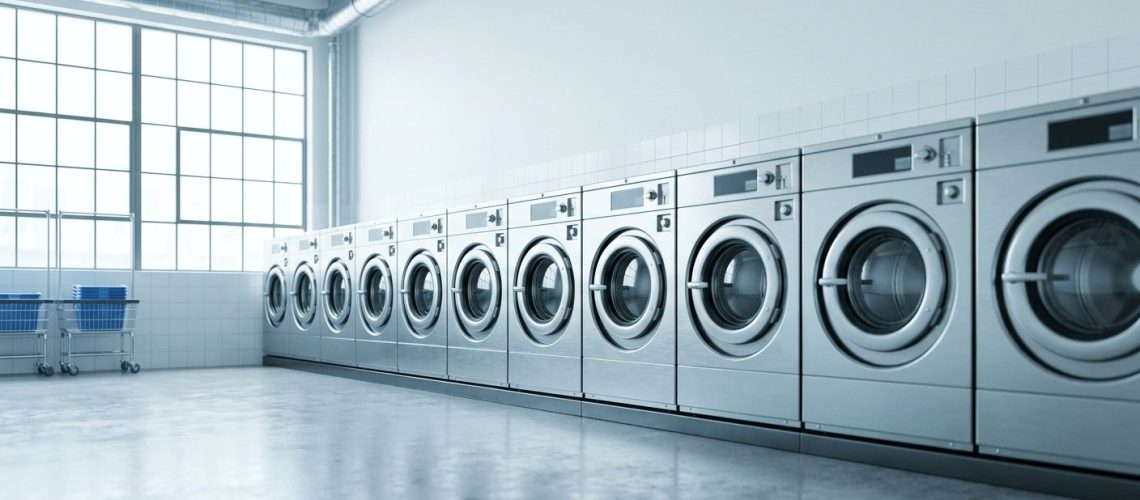
South Florida water utilities have raised rates in 18 of the last 20 years. For a hotel, nursing home, or laundromat running washers 10 to 16 hours a day, that trend isn’t a footnote—it’s a line item that compounds every billing cycle. The good news: modern commercial washer extractors have made dramatic strides in water consumption, and 2026 is an especially smart time to act. New efficiency thresholds are in effect, local rebate programs have expanded, and the gap in operating cost between older top-loaders and current high-efficiency front-loaders has never been wider.
This guide walks South Florida facility managers and business owners through what water efficiency actually means for commercial laundry equipment, what compliance requirements apply in 2026, and how to translate efficiency ratings into real dollars saved on your utility bills.
Why Water Efficiency Matters More Than Ever in South Florida
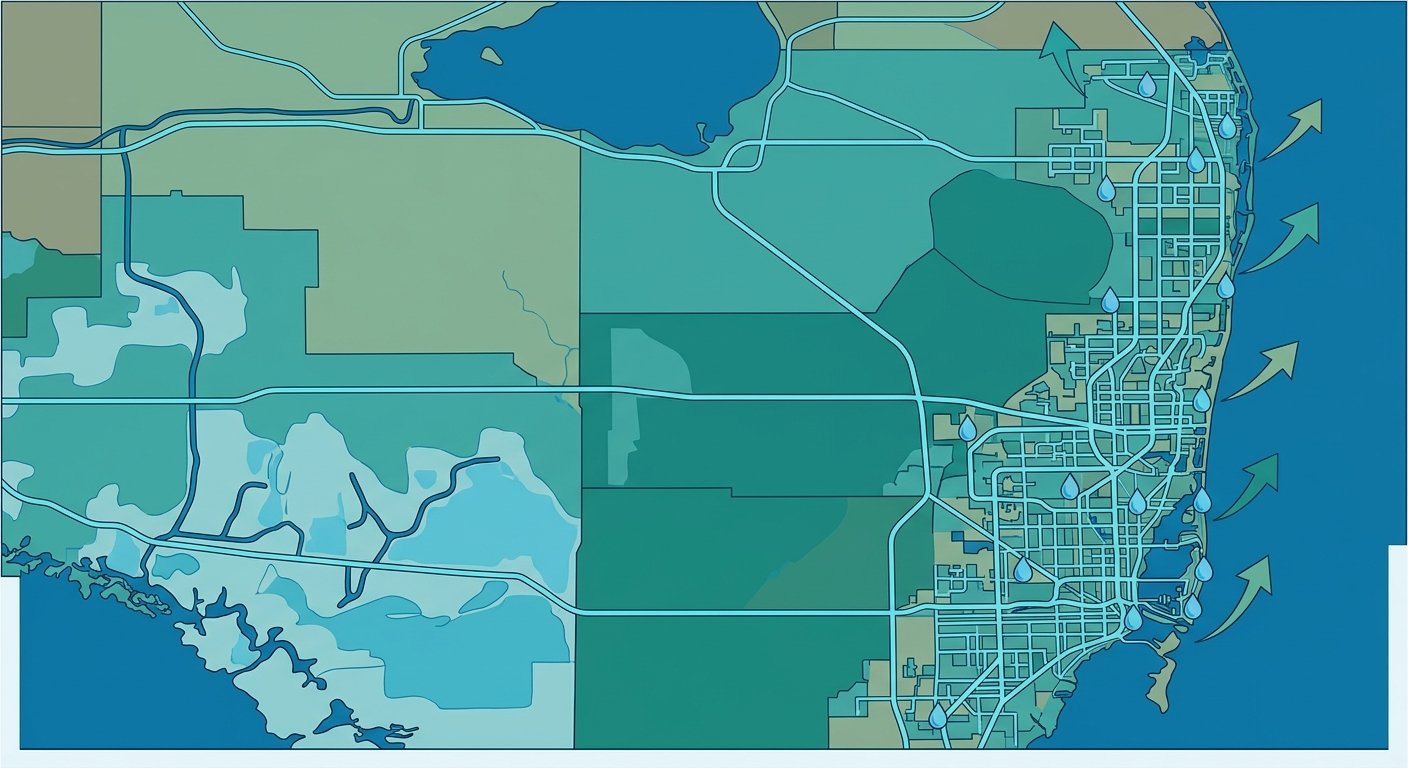
Florida’s South Florida Water Management District oversees one of the most carefully managed water supply systems in the country. Ongoing population growth across Palm Beach, Broward, and Miami-Dade counties keeps demand pressure high. The South Florida Water Management District actively promotes conservation through tiered pricing structures and utility partnerships—meaning the more water a commercial facility consumes, the higher the per-gallon rate climbs.
For a laundromat in Boca Raton or a hotel OPL (on-premises laundry) in Fort Lauderdale, the difference between an older conventional washer using 40+ gallons per cycle and a modern high-efficiency machine using 14 to 18 gallons isn’t abstract. Over a full year of commercial operations, that gap can represent tens of thousands of gallons and a meaningful reduction in your monthly utility bills.
Federal Efficiency Standards Effective in 2026
The U.S. Department of Energy updated its commercial clothes washer efficiency standards, with stricter thresholds that took effect for equipment manufactured after January 1, 2026. These standards are measured using two primary metrics:
- Modified Energy Factor (MEF): Measures cleaning performance per unit of energy consumed, including water heating energy. Higher is better.
- Water Factor (WF): Measures gallons used per cubic foot of washer capacity per cycle. Lower is better.
According to the U.S. Department of Energy’s efficiency standards for commercial clothes washers, the 2026 thresholds push minimum MEF and maximum WF requirements meaningfully beyond previous standards. Equipment that meets or exceeds these thresholds also becomes eligible for ENERGY STAR certification—a designation that matters both for rebate eligibility and for demonstrating environmental responsibility to guests, patients, and tenants.
If you’re operating commercial laundry equipment purchased before 2020, there’s a strong chance it does not meet current federal minimums. That matters for compliance, but it matters even more for your operating costs.
High-G Extraction: The Hidden Water Efficiency Multiplier
Most facility managers focus on water consumption during the wash cycle. Fewer consider what happens at extraction—and that’s where significant hidden savings live.
G-force refers to the centrifugal force generated during the spin cycle, expressed as a multiple of gravity. A standard commercial washer might extract at 100G. A high-performance extractor runs at 200G, 300G, or higher. At those higher G-forces, dramatically more water is removed from linens before they ever enter the dryer.
Why does that matter for water efficiency? It doesn’t reduce water consumption directly—but it dramatically reduces dryer energy use and cycle time. Linens entering a dryer at lower residual moisture require fewer minutes of heat to reach acceptable dryness. For a hotel processing hundreds of sheets daily or a nursing home running continuous loads, that reduction in dryer runtime translates to measurable natural gas or electric savings every single day.
When evaluating commercial laundry equipment total operating costs, high-G extraction is one of the most impactful—and most frequently overlooked—efficiency factors.
Hardmount vs. Softmount: What South Florida Facilities Need to Know
One of the most common questions we work through with facility managers across West Palm Beach, Delray Beach, and Miami involves hardmount versus softmount washers. Both can achieve excellent water efficiency, but they have different installation requirements that matter in South Florida’s building environment.
Hardmount Washers
Hardmount machines are bolted directly to a concrete slab. They’re typically lower in upfront equipment cost and well-suited for ground-floor OPL rooms with proper concrete foundations. Many South Florida hotels and healthcare facilities with purpose-built laundry rooms run hardmount configurations successfully.
Softmount Washers
Softmount machines use internal suspension systems that absorb vibration, allowing installation on upper floors without the structural reinforcement that hardmount equipment would require. For multi-housing properties in Boca Raton or Fort Lauderdale where laundry rooms sit above occupied units, softmount configurations are often the only practical option. They also tend to run higher spin speeds safely, contributing to better extraction performance.
The right choice depends on your building’s construction, floor location, and load requirements. Proper equipment sizing matters here too—undersized equipment forces more cycles; oversized equipment wastes water and energy on partial loads.
Water Efficiency Across Different South Florida Business Types
Hotels and Hospitality
South Florida’s hospitality sector runs some of the most demanding OPL operations in the region. High linen turnover, variable occupancy, and the expectation of impeccable presentation all create specific equipment requirements. Water-efficient front-load washer extractors paired with high-G extraction are the standard for modern hotel laundry rooms. Our hotel laundry equipment resource covers these requirements in detail.
Healthcare and Nursing Homes
Healthcare facilities in Palm Beach and Broward counties operate under specific infection control protocols that influence wash temperatures and cycle programming—factors that interact with water and energy consumption. High-efficiency machines with programmable controls allow facilities to meet hygiene standards while optimizing utility use across each load type.
Laundromats
Vended laundry operations depend on water efficiency for two reasons: lower utility costs directly improve margins, and ENERGY STAR-certified machines often qualify for utility rebates that improve the economics of new equipment investment. Front-load, high-efficiency washers also tend to generate higher per-cycle revenue because customers appreciate faster cycles and gentler fabric care.
Multi-Housing Properties
Apartment and condominium laundry rooms across Boynton Beach, Miami, and the surrounding areas benefit significantly from water-efficient equipment—both for direct cost savings on shared utility meters and for tenant satisfaction. Reliable, efficient equipment reduces maintenance calls and keeps common-area amenity scores high.
Speed Queen Commercial: Built for Efficiency and Durability
Among the equipment lines we carry and service, Speed Queen commercial laundry equipment consistently earns strong performance marks for both water efficiency and long-term durability. Speed Queen’s commercial front-load washers are engineered to meet 2026 federal efficiency standards and are built for the continuous-use demands of South Florida’s hospitality, healthcare, and laundromat operators.
Speed Queen commercial equipment also benefits from what matters as much as the machine itself: robust parts availability and factory-authorized service. A water-efficient washer that sits idle waiting for a part isn’t saving anyone anything. Local, responsive service is part of the efficiency equation.
Utility Rebates and Incentive Programs
Several South Florida utilities offer rebate programs for commercial facilities upgrading to ENERGY STAR-certified laundry equipment. These programs change periodically, so the most reliable approach is to check directly with your utility provider and confirm equipment eligibility before purchasing. The ENERGY STAR certified commercial clothes washers database is the authoritative source for confirming which models qualify.
When evaluating a new equipment investment, ask your equipment supplier to walk you through which models in your size range carry ENERGY STAR certification and whether your utility offers rebates. Those rebates can meaningfully offset the cost difference between standard and premium-efficiency configurations.
Frequently Asked Questions
What is Water Factor, and why does it matter for commercial washers?
Water Factor (WF) is the number of gallons a washer uses per cubic foot of drum capacity per cycle. Lower WF means less water consumed per load. For South Florida commercial operations running dozens of cycles daily, even a modest WF improvement compounds into significant annual water savings.
Do 2026 federal efficiency standards require me to replace existing equipment?
The 2026 standards apply to newly manufactured equipment, not machines already in operation. However, if your existing equipment predates modern efficiency standards, you’re likely paying substantially more in water and energy costs than you would with current models. The compliance question is less pressing than the cost question.
Is softmount or hardmount equipment more water-efficient?
Water efficiency is determined primarily by machine design and programming, not mount type. Both hardmount and softmount washers are available in high-efficiency configurations. The mount decision should be driven by your facility’s structural characteristics and installation requirements.
How important is proper equipment sizing for water efficiency?
Very important. A machine that’s too small for your load volume forces extra cycles, consuming more water and energy overall. A machine too large for typical loads wastes water on partial fills. Proper sizing—matched to your actual daily linen or garment volume—is foundational to achieving the efficiency ratings advertised on the equipment.
What should I ask a commercial laundry equipment supplier about water efficiency?
Ask for the Water Factor and MEF ratings for any machine you’re considering. Ask whether the model carries current ENERGY STAR certification. Ask about your utility’s rebate programs for qualifying equipment. And ask about local service availability—because an efficient machine that’s down for repairs isn’t efficient at all.
The Right Equipment, Properly Sized, Properly Serviced
Water efficiency in commercial laundry isn’t just about selecting a machine with a good spec sheet. It requires matching the right equipment to your facility’s actual throughput, installing it correctly, and maintaining it with factory-authorized parts and service. Efficiency ratings achieved in controlled testing only hold in real operations when machines are running as designed.
For over 55 years, Commercial Laundry Equipment Company has helped South Florida hotels, healthcare facilities, laundromats, and multi-housing properties select and maintain equipment that performs efficiently day in and day out. As a second-generation, family-owned business with factory-authorized service capabilities, we don’t just sell equipment—we stay involved long after installation.
If you’re evaluating new commercial laundry equipment for a South Florida facility, reach out to us at (561) 848-0054. We’ll help you understand your options, size equipment to your actual needs, and identify efficiency-related rebates available in your area. The right decision made today will be paying dividends on your utility bills for the next decade.