
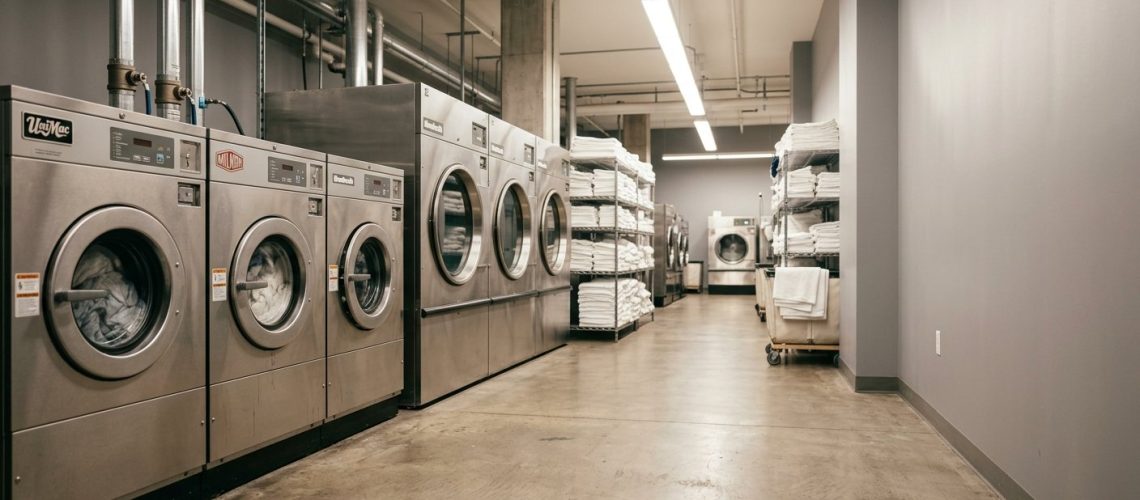
A 120-room hotel in Boca Raton generating steady occupancy will process somewhere between 300 and 500 pounds of linen daily. That’s sheets, pillowcases, towels, and terry goods cycling through your operation every single day, year-round. How you handle that volume—whether through a commercial linen service or an on-premise laundry (OPL) system—has a direct and lasting impact on your operating margins, guest satisfaction, and operational control.
This is one of the most consequential decisions a hotel operator can make, and it rarely gets the detailed analysis it deserves. Let’s break it down honestly.
What “Linen Service” Actually Costs You
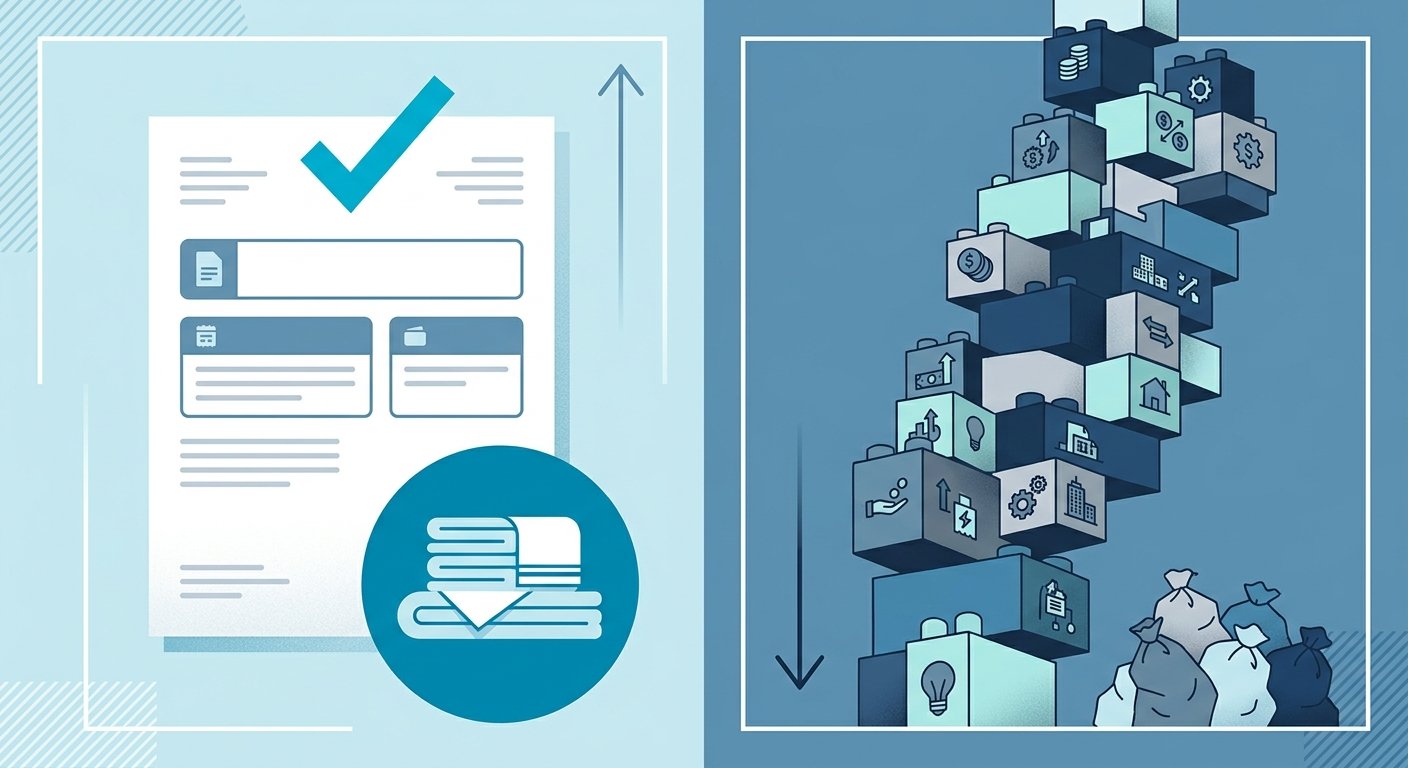
Commercial linen rental and laundering services charge hotels on a per-piece or per-pound basis. On the surface, this looks like simplicity: no equipment investment, no staffing for laundry, no utilities. You pay an invoice and linens appear.
In practice, however, the costs compound quickly.
- Per-piece charges for sheets, towels, and specialty items add up fast at scale. At moderate occupancy over a full year, many South Florida hotels spend between $80,000 and $150,000 or more annually on linen services—sometimes significantly higher for larger properties.
- Linen loss and damage fees are routinely buried in contracts. Items deemed stained, torn, or missing are billed back to the hotel, often at rates that exceed replacement cost.
- Minimum volume requirements mean you pay even during slower periods when occupancy dips.
- Contract escalation clauses allow service providers to raise rates annually, often tied to fuel surcharges or labor indexes you have no control over.
- Inventory control disappears. When linens leave your property, tracking losses becomes nearly impossible.
Perhaps most critically, you lose operational flexibility. If a linen delivery is late, damaged, or short—which happens—you have no backup. Guest rooms can’t turn over on schedule, and that directly hits revenue.
The Real Value of Hotel On-Premise Laundry
An on-premise laundry operation means you own and operate your laundry equipment on-site, processing all linen and terry in-house. The upfront capital investment is real, but so are the long-term advantages.
Cost Per Pound: The Honest Comparison
When hotels calculate their true cost per pound for in-house laundry—factoring in utilities, labor, chemicals, and equipment amortization—it consistently comes in lower than commercial linen service rates for properties processing sufficient volume. The breakeven threshold varies by property size and occupancy, but for most full-service hotels and larger limited-service properties in South Florida, the economics favor OPL strongly over a five-to-ten year horizon.
The ENERGY STAR program documents significant utility savings available through high-efficiency commercial washers—savings that compound year over year when you control your own equipment and can select energy-efficient models.
Control, Quality, and Guest Satisfaction
When you process linen on-site, you control wash formulas, water temperature, chemical concentrations, and cycle times. This directly affects linen longevity and cleanliness standards. Hotels that switch from linen service to OPL frequently report extended linen life because they’re no longer subject to the institutional processing conditions of a commercial laundry serving dozens of clients simultaneously.
You also respond faster. A linen shortage at 11 AM on a busy Saturday doesn’t become a crisis—it becomes a two-hour wash cycle. That operational resilience has real value that doesn’t show up in a per-pound cost comparison but absolutely shows up in guest reviews and repeat bookings.
Equipment That Makes OPL Work for Hotels
The success of a hotel on-premise laundry depends heavily on selecting the right commercial laundry equipment. This is where working with an experienced local partner matters significantly.
Washer-Extractors: Hardmount vs. Softmount
Hotels have two primary options for commercial washers: hardmount and softmount machines. Hardmount units are bolted directly to the floor and require a reinforced concrete slab to absorb extraction vibration. Softmount machines use internal suspension systems that isolate vibration, allowing installation on upper floors or in buildings where floor reinforcement isn’t feasible.
For many South Florida hotel properties—older buildings, multi-story configurations, or renovated spaces—softmount washers provide the installation flexibility that makes an OPL system viable where hardmount equipment would require costly structural modifications.
High-G Extraction and Drying Efficiency
One of the most impactful specifications in commercial laundry equipment for hotels is the G-force extraction rating. Higher G-force extraction removes more moisture from linens before they enter the dryer. A machine achieving 350-400G extraction versus 100G can reduce drying time by 30% or more, which directly translates to lower gas or electric costs and faster linen throughput—both critical in a high-occupancy hotel environment.
According to the U.S. Energy Information Administration, laundry equipment is among the more energy-intensive systems in commercial buildings. Choosing equipment with superior extraction performance is one of the highest-return decisions a hotel operator can make when building out an OPL system.
Proper Sizing Is Non-Negotiable
Undersized equipment creates a bottleneck that undermines the entire value proposition of OPL. Oversized equipment wastes capital and utility costs. Proper sizing requires calculating your actual linen poundage—accounting for room count, occupancy patterns, linen par levels, and F&B if applicable—then matching that to equipment capacity with appropriate throughput margin.
This is exactly the kind of analysis we walk hotel operators through before recommending any equipment. Getting the sizing right from the start prevents the operational headaches that come from retrofitting or adding capacity after the fact.
South Florida Considerations for Hotel Laundry Operations
Operating a hotel laundry in South Florida introduces some specific factors that don’t apply in every market.
- Year-round demand. Unlike seasonal resort markets in other regions, South Florida hotels—from Miami to West Palm Beach—operate at meaningful occupancy throughout the year. This sustained volume strengthens the OPL economics compared to markets with long low seasons.
- Utility rates. Florida Power & Light and other regional utilities have specific rate structures that affect the operating cost calculation for electric dryers versus gas. Understanding your actual utility rates is essential when projecting OPL operating costs.
- Humidity and ventilation. Proper dryer venting and room ventilation are important in South Florida’s humid environment. Inadequate exhaust design leads to moisture buildup, lint accumulation, and potential equipment issues. This is a building consideration, not an equipment specification, but it’s one that affects long-term equipment performance.
- Local service availability. Commercial laundry equipment requires regular preventive maintenance and occasional repair. Having factory-authorized service and OEM parts locally available in South Florida means faster response when something needs attention—rather than waiting on technicians or parts from out of state.
Our team at Commercial Laundry Equipment Company has been serving hotel operators across Palm Beach, Broward, and Miami-Dade counties for over 55 years. We understand the local building environment, utility structures, and business rhythms in a way that national equipment vendors simply don’t.
When Linen Service Still Makes Sense
Fairness requires acknowledging that OPL isn’t the right answer for every property.
Very small boutique hotels with limited room counts and minimal linen volume may not process enough pounds daily to justify the capital investment and dedicated space. Properties with no viable space for a laundry room—or where the cost of creating appropriate space is prohibitive—may find linen service more practical. And some operators simply prefer to focus capital elsewhere in their business.
The honest approach is to run the numbers for your specific property before committing to either direction. We’ve helped hotel operators in Fort Lauderdale, Delray Beach, and throughout South Florida work through this analysis, and the answer isn’t always the same.
Frequently Asked Questions
How much space does a hotel on-premise laundry room typically require?
Space requirements vary based on your linen volume and equipment configuration, but most hotel OPL rooms range from 400 to 1,200 square feet. Proper layout planning—accounting for equipment clearances, folding tables, linen carts, and utility connections—is as important as square footage. A well-designed compact room can outperform a poorly organized larger space.
What commercial laundry equipment does a hotel OPL typically include?
A standard hotel on-premise laundry includes washer-extractors (sized to your linen volume), tumble dryers matched to washer capacity, ironers or flatwork finishers for sheets and pillowcases, and folding tables with adequate staging space. Some properties also add a dedicated small-load machine for specialty items or employee uniforms.
How long does commercial hotel laundry equipment typically last?
Well-maintained commercial washer-extractors and dryers routinely operate for 15 to 20 years or more. The key variables are equipment quality, proper sizing (avoiding chronic overloading), preventive maintenance frequency, and using OEM replacement parts. Cutting corners on any of these shortens equipment life considerably.
Does the type of linen affect the OPL vs. linen service decision?
Yes. Hotels with luxury linen programs—high thread-count sheets, specialty terry—often prefer OPL because they can control wash chemistry and mechanical action to protect their linen investment. Commercial laundry services process items in bulk with standardized programs that may not be gentle enough for premium goods.
How do I get started evaluating OPL for my South Florida hotel?
Start by calculating your daily linen poundage and reviewing your current linen service invoices for the past 12 months. Then consult with a commercial laundry equipment specialist who can assess your space, recommend properly sized equipment, and project realistic operating costs for your specific property.
Making the Right Call for Your Property
The decision between hotel on-premise laundry and commercial linen service isn’t just a cost calculation—it’s a strategic choice about operational control, guest experience, and long-term financial performance. For most South Florida hotels processing meaningful linen volume, the economics and operational advantages of a well-designed OPL system are compelling.
If you’re evaluating hospitality laundry solutions for your property—whether you’re building new, renovating, or reconsidering an existing linen service contract—we’re ready to help you work through it. Commercial Laundry Equipment Company has been the trusted local resource for hotel laundry equipment across South Florida for over 55 years, and our factory-authorized service team is here well after installation. Call us at (561) 848-0054 or reach out online to schedule a consultation.