
Refurbished commercial laundry equipment represents a compelling middle ground between budget constraints and performance expectations. For South Florida businesses evaluating equipment options in 2026, certified refurbished washers and dryers can deliver 40-60% cost savings while providing reliable service when properly reconditioned by qualified specialists.
The key lies in understanding what separates professionally refurbished equipment from used machines with cosmetic updates. This distinction determines whether you’re making a smart investment or inheriting someone else’s problems.
What Makes Commercial Laundry Equipment “Certified Refurbished”
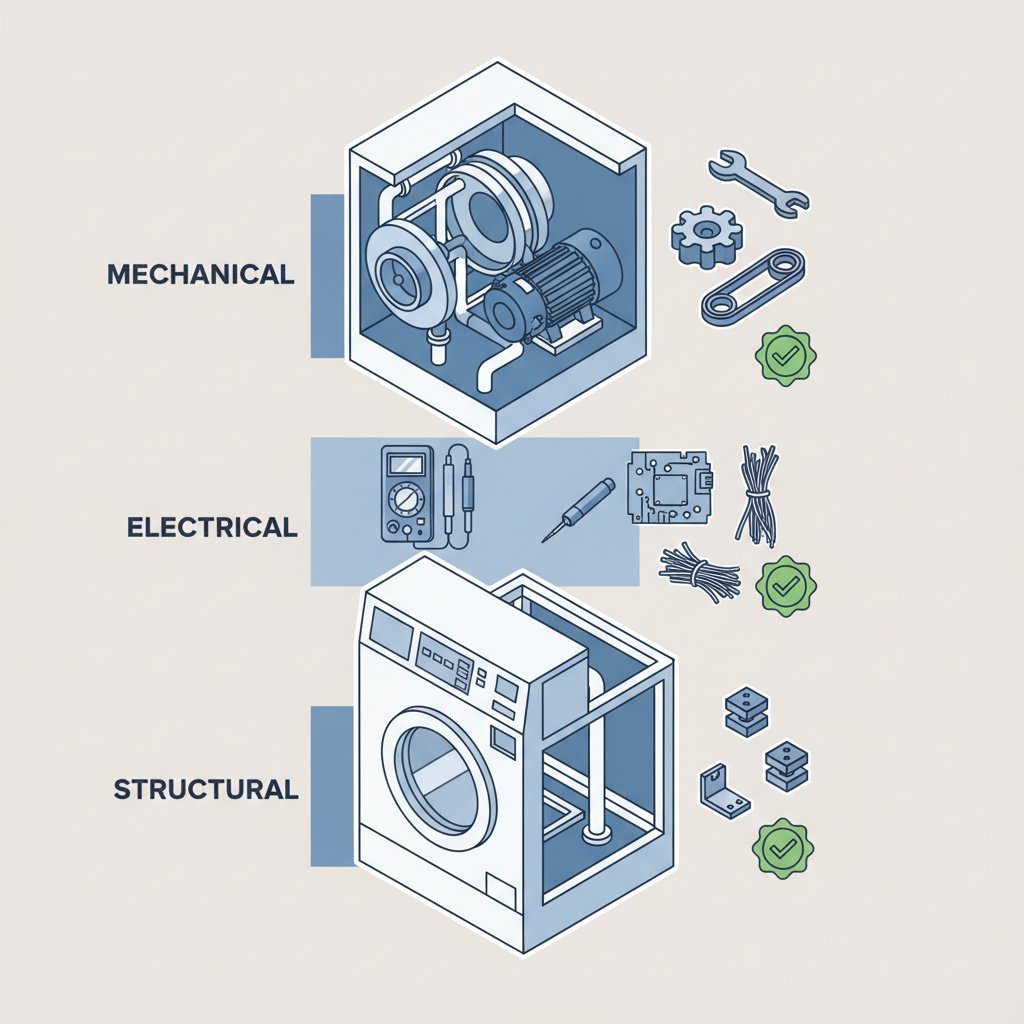
Certified refurbished commercial washing machines undergo systematic restoration processes that address mechanical, electrical, and structural components. A proper refurbishment program includes complete disassembly, inspection of wear components, replacement of predetermined parts regardless of visible condition, and testing under load conditions that simulate actual use.
The refurbishment process typically involves:
- Complete teardown and inspection of all mechanical assemblies
- Bearing replacement on drums and motors
- New belts, hoses, and gaskets throughout
- Control board testing and component-level repairs when applicable
- Cabinet restoration including rust treatment and refinishing
- Testing through multiple cycles with verification of extraction speeds, water temperatures, and mechanical operation
- Documentation of all replaced components and test results
Equipment that merely receives cleaning and a fresh coat of paint doesn’t qualify as properly refurbished. This distinction matters significantly for longevity and reliability.
The Economics of Refurbished vs New Equipment
A new 60-pound hardmount washer from commercial manufacturers typically costs $18,000-$25,000 installed in 2026. The same model, properly refurbished, might cost $8,000-$12,000. For multi-housing properties or hotels installing multiple machines, these savings become substantial.
However, the economic analysis extends beyond purchase price. Refurbished equipment typically carries shorter warranties—often one year compared to three to five years for new machines. Energy efficiency may not match current models, particularly with equipment manufactured before 2020. A refurbished washer using 15% more water and gas annually can erode savings over a ten-year lifespan.
The calculation shifts based on application intensity. A hotel processing 400 pounds daily puts different demands on equipment than an apartment complex handling weekend volume spikes. Higher-intensity operations benefit more from new equipment’s efficiency and warranty coverage, while moderate-use scenarios make refurbished equipment more attractive.
Age and Model Considerations for Refurbished Equipment
Not all refurbished commercial laundry equipment offers equal value. Machines manufactured within the past seven years generally provide the best balance of modern features, parts availability, and remaining service life. Equipment older than twelve years, regardless of refurbishment quality, faces increasing parts obsolescence and lacks efficiency improvements that lower operating costs.
Specific models matter considerably. Commercial laundry manufacturers periodically redesign component systems. Purchasing refurbished equipment from model lines still in production ensures parts availability throughout the machine’s service life. Discontinued models may perform well initially but create headaches when bearings, controls, or specialized components need replacement.
Control systems represent a particular concern. Early electronic controls and proprietary computerized systems from 2015-2018 sometimes have limited parts availability in 2026. Mechanical controls or current-generation electronics typically offer better long-term support.
Evaluating Refurbished Equipment Suppliers
The refurbishment source dramatically impacts equipment quality and post-purchase support. Factory-authorized refurbishment programs offer the highest reliability, as manufacturers control quality standards and typically provide warranties comparable to new equipment. These programs remain relatively rare in commercial laundry, but several major manufacturers introduced certified refurbished programs between 2023-2025.
Independent refurbishment specialists vary widely in capability. Qualified refurbishers maintain factory authorizations, stock OEM replacement parts, employ trained technicians, and provide detailed documentation of work performed. They should willingly discuss their refurbishment process in specific terms and provide references from commercial customers with similar applications.
Warning signs include vague descriptions of the refurbishment process, inability to provide parts replacement documentation, lack of warranty coverage, or prices that seem unusually low even for refurbished equipment. A hardmount washer offered at 70-80% below new pricing likely received minimal actual refurbishment.
Warranty and Service Considerations
Warranty coverage separates legitimate refurbished commercial laundry equipment from cosmetically refreshed used machines. Expect at least a one-year parts and labor warranty on certified refurbished equipment. Shorter warranties suggest the seller lacks confidence in their refurbishment work.
More important than warranty length is the service network behind it. A three-year warranty provides little value if the nearest qualified technician operates 200 miles away or if parts take weeks to arrive. For South Florida installations, verify that the equipment supplier maintains local service capability with stocked parts inventories.
Ask specific questions about warranty coverage: Does it include all components or exclude certain wear items? Is labor coverage limited to business hours or available for emergency service? Who performs warranty work—factory-trained technicians or general appliance repair contractors? These details determine real-world warranty value.
Application-Specific Refurbished Equipment Considerations
Hotels and Hospitality
Hotels processing guest laundry in-house face consistent daily volume with quality expectations that impact guest satisfaction. Refurbished equipment works well for hotels with on-site maintenance staff who can perform routine adjustments and minor repairs. Properties relying entirely on service contractors benefit more from new equipment’s extended warranties and lower failure rates.
Consider equipment age carefully for hospitality applications. A five-year-old refurbished washer provides reliable service; a twelve-year-old machine approaches end-of-life regardless of refurbishment quality.
Multi-Housing and Apartments
Apartment laundry rooms represent ideal applications for refurbished commercial washing machines. Moderate usage intensity, lower quality-perception stakes, and straightforward coin or card operation reduce operational risks. The cost savings enable property owners to upgrade from consumer-grade machines to commercial equipment within similar budgets.
Focus on equipment with simple, proven controls rather than machines with extensive programming features that create service complications. Mechanical coin drops or basic card systems prove more reliable than complex payment technologies in refurbished installations.
On-Premise Laundries (OPL)
Healthcare facilities, nursing homes, and institutional laundries processing specific textile types need to verify that refurbished equipment meets regulatory requirements and operational specifications. Machines must achieve documented hot water temperatures, proper extraction speeds, and appropriate cycle programming for healthcare textiles.
For these applications, request documentation that refurbished equipment meets applicable standards rather than relying on verbal assurances. The regulatory stakes make this verification essential.
Vended Laundromats
Laundromat investors face unique considerations with refurbished equipment. Machines operate at high intensity with diverse users and minimal operator oversight. Equipment reliability directly impacts revenue—a machine down for repairs generates zero income.
Successful laundromat refurbished equipment strategies typically involve purchasing from suppliers who specialize in coin laundry, understand the specific demands of vended operation, and provide rapid parts support. Mixing two or three new flagship machines with refurbished equipment balances costs while ensuring capacity during service issues.
Installation and Infrastructure Requirements
Refurbished commercial laundry equipment carries the same installation requirements as new machines. Hardmount washers need properly reinforced concrete foundations. Utility connections must meet manufacturer specifications regardless of equipment age. Dryers require adequate exhaust ducting sized for rated CFM requirements.
Some buyers mistakenly assume that refurbished equipment justifies shortcuts in installation quality. This thinking creates problems. Improperly installed equipment—new or refurbished—fails prematurely and operates inefficiently. The installation investment remains constant; the equipment cost decreases.
Verify that your refurbished equipment supplier either provides professional installation or connects you with qualified installers familiar with commercial laundry requirements. South Florida building codes and inspection requirements apply equally to all equipment regardless of new or refurbished status.
Parts Availability and Long-Term Support
The greatest risk with refurbished laundry equipment in South Florida involves parts availability five or seven years post-purchase. A washer that performs flawlessly initially but requires a discontinued bearing assembly or obsolete control board in 2031 becomes an expensive problem.
Before purchasing, research the specific model’s production history and current parts support. Equipment still in production offers the most security. Recently discontinued models typically maintain parts availability for seven to ten years. Machines discontinued more than five years ago present increasing risks.
Your equipment supplier’s relationship with manufacturers matters here. Factory-authorized dealers access technical support and parts channels unavailable to independent operators. This authorization becomes crucial when diagnosing complex issues or sourcing specialized components.
When Refurbished Equipment Makes Sense
Refurbished commercial laundry equipment delivers optimal value in specific scenarios:
- Moderate-intensity applications without round-the-clock operation
- Budget constraints that would otherwise require consumer-grade equipment
- Temporary installations or pilot programs before full facility buildouts
- Supplementing existing equipment to increase capacity without major capital expenditure
- Replacement situations where existing infrastructure matches refurbished equipment specifications
Conversely, new equipment better serves high-intensity operations, situations requiring maximum energy efficiency, applications with strict regulatory requirements, or scenarios where equipment failure creates significant business disruption.
Due Diligence Before Purchase
Protect your refurbished equipment investment through thorough vetting:
- Request detailed specifications including model numbers, manufacture dates, and serial numbers before committing
- Obtain written documentation of the refurbishment work performed with parts replacement lists
- Review warranty terms in writing with specific coverage details
- Verify the supplier’s service capabilities and parts inventory for your geographic area
- Check references from commercial customers with similar applications
- Confirm that equipment meets current safety and building code requirements
- Calculate total cost of ownership including projected energy and water consumption, not just purchase price
If possible, inspect equipment before delivery or visit the refurbishment facility to assess their operations and quality standards.
Making the Right Choice for Your Operation
Certified refurbished commercial laundry equipment in South Florida offers legitimate value when sourced from qualified suppliers, properly matched to application requirements, and supported by adequate warranty and service infrastructure. The 40-60% cost savings enable equipment upgrades or multi-machine installations that might exceed budgets for new equipment.
Success requires looking beyond initial price to evaluate total ownership costs, parts availability, service support, and realistic assessment of your operation’s demands. A refurbished washer that delivers seven years of reliable service at half the cost of new equipment represents excellent value. Equipment that requires frequent repairs or becomes parts-obsolete after three years proves expensive regardless of attractive initial pricing.
The decision ultimately depends on your specific situation—application intensity, budget parameters, risk tolerance, and long-term facility plans. Professional guidance from experienced equipment specialists helps navigate these considerations and identify solutions that balance cost savings with operational reliability.
For South Florida businesses evaluating refurbished commercial washing machines and dryers, partner with suppliers who understand commercial laundry demands, maintain factory authorizations, stock genuine OEM parts, and provide local service support. These fundamentals determine whether refurbished equipment delivers value or creates headaches.
Need expert guidance on whether refurbished or new commercial laundry equipment makes sense for your specific application? Our team brings decades of experience helping South Florida businesses make informed equipment decisions backed by comprehensive service support. Contact us to discuss your requirements and explore options that balance performance, reliability, and budget realities.