
Flatwork Finishing Equipment
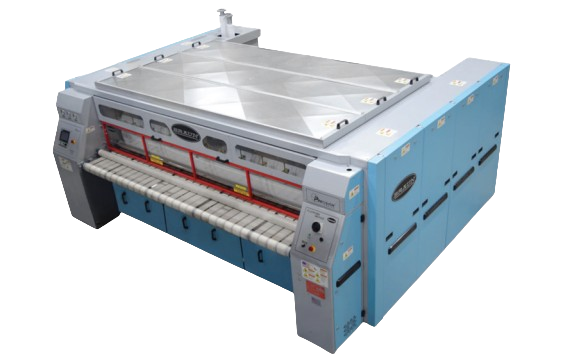
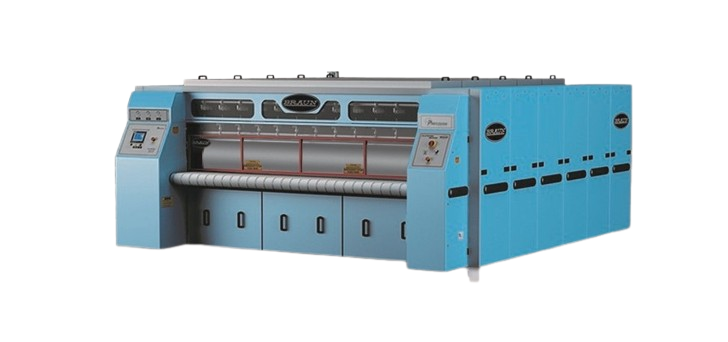
Commercial flatwork ironers and folders for hotels, healthcare facilities, and laundromats. CLEC supplies UniMac, CMV Sharper Finish, and Braun flatwork finishing equipment that automates the ironing and folding of sheets, tablecloths, napkins, and other flat linens.
What is Flatwork Finishing?
Flatwork finishing refers to the automated ironing and folding of flat linen items — bed sheets, pillowcases, tablecloths, napkins, towels, and other items without complex shapes or seams. Unlike tumble-dried laundry, flatwork finishing produces crisp, professionally pressed linens with sharp creases.
Commercial flatwork finishers eliminate manual labor while dramatically increasing throughput. A single operator with a flatwork ironer can process hundreds of pieces per hour compared to dozens per hour with manual ironing. The equipment pays for itself through labor savings, reduced linen replacement costs, and improved finished quality.
Hotels, healthcare facilities, restaurants, and party rental companies rely on flatwork finishing equipment to maintain the professional appearance guests and patients expect while controlling labor costs and maintaining consistent quality standards.
Flatwork Finishing Brands We Supply
CLEC is an authorized distributor for leading flatwork finishing equipment manufacturers. We provide complete equipment lines, factory-backed warranties, and local service support across Palm Beach and Broward Counties.
Types of Flatwork Finishing Equipment
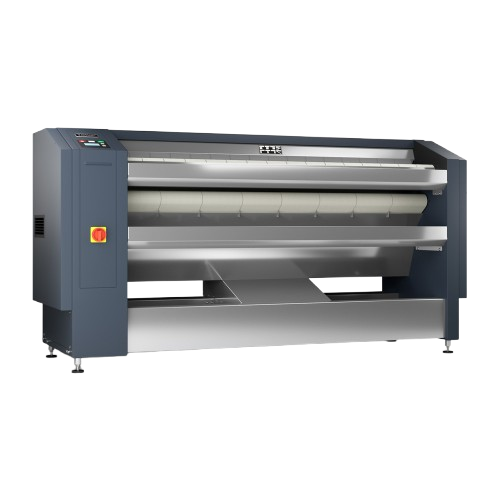
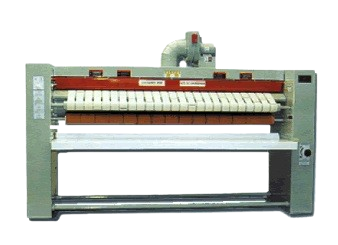
Flatwork finishing systems range from standalone ironers to integrated ironer-folder-stacker combinations that process linen from wet to folded with minimal operator involvement.
Industries That Rely on Flatwork Finishing
Any facility processing large volumes of bed linens, table linens, or towels benefits from automated flatwork finishing. Professional appearance matters in hospitality and healthcare — and manual ironing simply cannot deliver consistent quality at scale.
Benefits Over Manual Ironing & Folding
Flatwork finishing equipment transforms labor-intensive manual processing into efficient automated operations that deliver consistent quality at dramatically lower cost per piece.
Linen Types Processed by Flatwork Equipment
Flatwork finishing equipment handles any flat linen item without complex shapes, seams, or buttons. Different linen types may require adjustments to ironer temperature, speed, or folder settings.
Flatwork Finishing FAQ
Common questions about commercial flatwork ironers and folders for hotels, healthcare facilities, and laundromats.
Call 561-848-0054 to discuss equipment sizing and application requirements.
561-848-0054Facilities processing 100+ pieces daily typically see ROI within 12-24 months. Hotels with 50+ rooms, healthcare facilities with 25+ beds, or restaurants seating 100+ guests generate sufficient volume. Even smaller operations can justify equipment if outsourcing costs exceed $1,500-2,000 monthly or if professional finish quality is critical to brand standards.
It depends on your volume, space, and labor availability. Combination units (iron + fold + stack in one machine) require less floor space and can be operated by a single person, making them ideal for smaller facilities or those with limited labor. Separate ironers and folders offer more flexibility — you can iron more pieces than you fold, or run multiple items through the ironer while folding batches separately. We assess your operation during site visits to recommend the most efficient configuration.
Cylinder diameter determines capacity and throughput. Small operations (restaurants, small hotels) typically use 7-12" diameter ironers. Medium facilities (50-150 room hotels, nursing homes) use 12-24" diameter models. Large hotels (200+ rooms), hospitals, or commercial laundries require 24-36" diameter industrial ironers. Finishing width (36" to 136") must accommodate your largest linen items. We conduct site assessments to match equipment to your specific linen types, volumes, and space constraints.
Space requirements vary by equipment size and configuration. Small single-operator ironers (7-12" cylinder) need approximately 10-15 feet of linear space. Medium production ironers (12-24" cylinder) require 15-25 feet. Large industrial systems (24-36" cylinder) with folders and stackers may need 30-40 feet. Ceiling height requirements range from 8-12 feet depending on the model. We evaluate your available space during site visits and recommend equipment that fits your facility layout.
Flatwork ironers require a heat source (natural gas, propane, steam, or electricity) to heat the cylinder, plus electrical service for motors and controls. Gas-heated models typically use 1-1/4" to 1-1/2" gas lines depending on BTU rating. Steam-heated models require adequate boiler capacity and steam pressure (typically 80-100 PSI). Electric-heated models need 208-240V three-phase service with amperage ranging from 30A to 100A+ depending on cylinder size. Ventilation requirements vary by model and heat source.
Yes. Modern flatwork ironers have adjustable temperature, speed, and pressure settings to accommodate different fabric types and weights. Delicate embroidered linens, specialty tablecloths, and fine fabrics can be processed safely by reducing cylinder temperature and slowing feed speed. Some facilities run delicate items separately from standard linens to maintain optimal settings for each fabric type. Proper operator training ensures delicate items receive appropriate handling.
Commercial flatwork finishers are built for 15-20+ years of service life with proper maintenance. Heavy-duty construction, industrial-grade components, and repairable design allow these machines to operate reliably for decades. Regular maintenance (bearing lubrication, belt replacement, padding changes) extends equipment life and maintains performance. Many facilities operate flatwork ironers for 25-30+ years, making the per-piece cost extremely low over equipment lifetime.
Yes. CLEC handles complete flatwork equipment installation including utility connections, equipment setup, calibration, and testing. We provide comprehensive operator training covering proper feeding techniques, temperature and speed adjustments for different linen types, safety procedures, and basic maintenance. Training typically takes 4-8 hours depending on equipment complexity and number of operators. We also offer ongoing support and service for all equipment we install.
Automate Your Flatwork Finishing
Schedule a site assessment to review your linen volumes, available space, and production requirements. Get a complete equipment quote with ROI analysis and installation planning.